
Secured vs Unsecured Loans: Key Differences Every Borrower Should Know
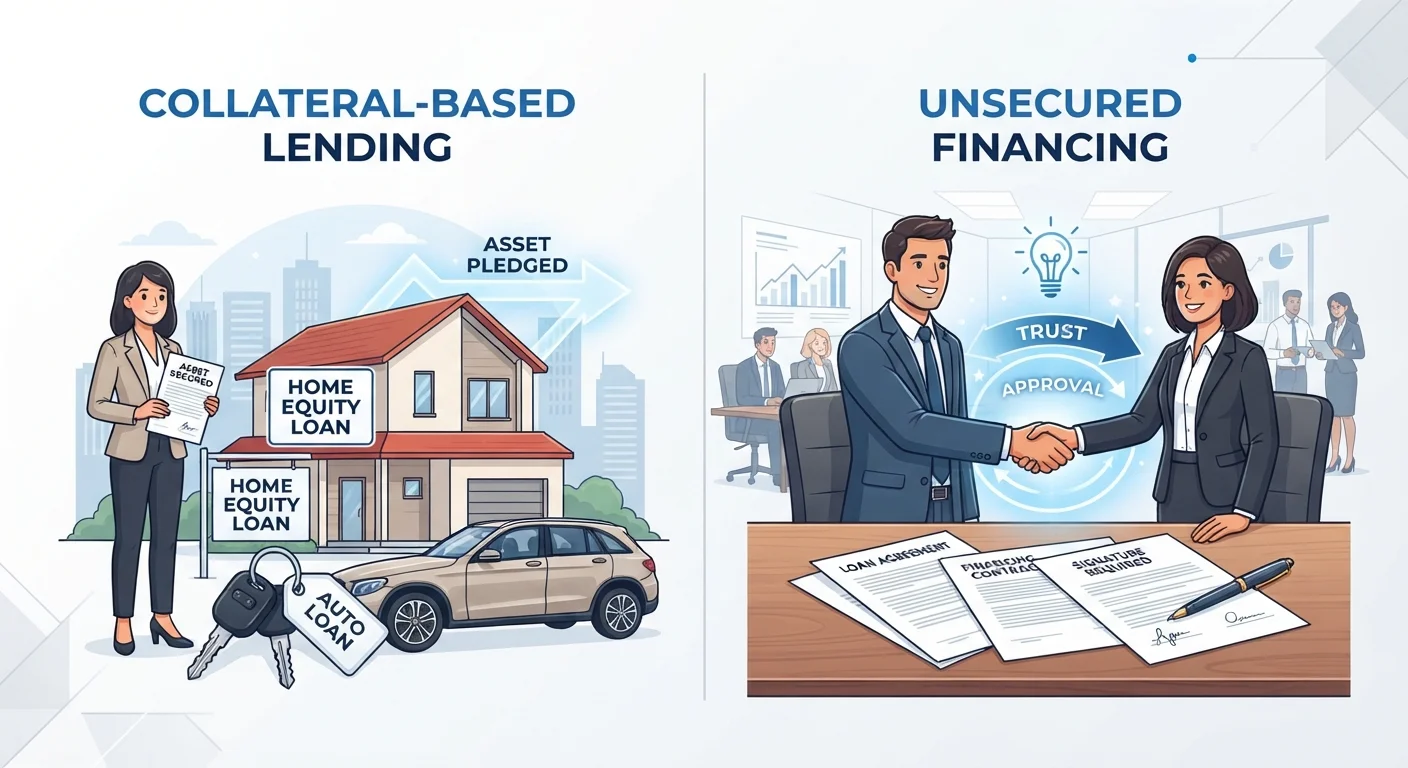
Photo credit: NewBizBuzz.net | Financial Insights For All
In this article
Secured and unsecured loans work very differently. Understand the trade-offs in risk, rates, and eligibility before you borrow.
Key Takeaways
- Secured loans require collateral; the lender can seize that asset if you default.
- Unsecured loans rely on creditworthiness and typically carry higher interest rates.
- Secured loans generally offer higher borrowing limits and longer repayment terms.
- Default consequences differ significantly: asset loss versus credit damage and collections.
- Your credit profile and the purpose of borrowing should drive which structure you choose.
What Separates Secured from Unsecured Borrowing
At the structural level, the distinction is straightforward: a secured loan is backed by a specific asset — collateral — that the lender holds a legal claim over. A unsecured loan carries no such claim; the lender extends credit based primarily on the borrower's creditworthiness and ability to repay.
Common secured loans include mortgages (collateral: the home), auto loans (collateral: the vehicle), and home equity loans (collateral: built-up equity). Common unsecured loans include personal loans, student loans, and most credit cards. For a deeper look at how these structures play out in the credit card context, see how secured and unsecured cards compare.
This structural difference flows downstream into nearly every loan feature: interest rate, borrowing limit, qualification criteria, and the consequences of default.
| Criterion | Secured Loans | Unsecured Loans |
|---|---|---|
| Collateral required | Yes — specific asset pledged | No — credit-based only |
| Typical interest rates | Lower, reflecting reduced lender risk | Higher, reflecting greater lender exposure |
| Borrowing limits | Generally higher | Generally lower |
| Loan terms | Often longer (up to 30 years) | Typically shorter (2–7 years) |
| Qualification criteria | Asset value + creditworthiness | Creditworthiness and income only |
| Default consequence | Asset seizure or foreclosure | Credit damage, collections, potential lawsuit |
| Common examples | Mortgage, auto loan, home equity loan | Personal loan, student loan, credit card |
Risk, Rates, and What Lenders Are Actually Pricing
Interest rates on secured loans tend to be materially lower than their unsecured counterparts because the collateral reduces the lender's exposure. If a borrower defaults, the lender has a defined path to recover value — seizing and selling the pledged asset. That recovery mechanism is priced into the rate you receive.
On unsecured loans, lenders have no such fallback. They rely on credit scores, debt-to-income ratios, and income verification to assess repayment likelihood. Greater lender risk translates directly into higher borrowing costs for the borrower.
~6–8%
Typical unsecured personal loan APR spread over mortgages
Federal Reserve consumer credit data consistently shows unsecured personal loan rates running several percentage points above secured mortgage rates, reflecting the collateral risk premium.
~80%
Share of US consumer debt that is secured
Federal Reserve Flow of Funds data indicates that the majority of household debt in the US is collateral-backed, primarily through mortgages and auto loans.
This also shapes loan terms. Secured loans — especially mortgages — can extend across 15 to 30 years with relatively stable monthly payments. Unsecured personal loans typically carry terms of two to seven years, partly because longer exposure amplifies default risk without a collateral buffer. For borrowers weighing how rate structure interacts with loan type, understanding fixed versus variable rate mechanics is a logical next step.
Default Consequences: A Critical Difference
The consequences of default differ substantially between the two structures — and understanding this asymmetry is essential before borrowing.
With a secured loan, default triggers the lender's right to repossess or foreclose on the pledged asset. Miss enough mortgage payments and the lender can initiate foreclosure proceedings, ultimately taking ownership of your home. Default on an auto loan and repossession can occur quickly — sometimes within weeks, depending on state law and loan terms. The lender may also pursue a deficiency judgment if the asset's sale price doesn't cover the outstanding balance.
With an unsecured loan, there is no specific asset to seize. Default leads to serious credit damage, collections activity, potential lawsuits, and wage garnishment in some jurisdictions — but your home and car are not directly encumbered by that particular debt. This distinction matters enormously in financial planning and risk assessment.
Deficiency Balances After Default
When a secured asset is repossessed and sold, the proceeds may not cover the full outstanding loan balance. The remaining shortfall — called a deficiency balance — can still be pursued by the lender through legal action. This means defaulting on a secured loan can carry both the loss of your asset and continued financial liability. State laws vary significantly in how they regulate deficiency judgments, so borrowers facing hardship should seek legal guidance promptly.
Borrowers juggling multiple debt instruments should consider how each type fits within their overall debt management strategy. Matching the right debt instrument to the right need can prevent overextension and misuse of credit products.
Choosing the Right Structure for Your Situation
Neither loan type is universally superior — the right choice depends on your financial profile, the purpose of the loan, and your risk tolerance.
If you're financing a major purchase tied to a specific asset — a home, vehicle, or renovation — a secured structure is typically the appropriate instrument. The collateral relationship is natural, and the rate and term advantages are meaningful over time. Homebuyers interested in how mortgage structuring decisions affect long-term outcomes may also find it useful to review interest-only versus repayment mortgage trade-offs.
If you need funds for consolidating high-interest debt, covering an unplanned expense, or financing something not tied to a pledgeable asset, an unsecured loan may be more practical — provided your credit profile supports a competitive rate. Borrowers with limited credit history may find unsecured options inaccessible or priced punitively, making a secured alternative worth exploring even when the use case isn't asset-specific.
Ultimately, the decision requires honest assessment of your ability to service the debt, the consequences of worst-case outcomes, and the total cost of borrowing over the loan's life. This article provides general financial education and is not a substitute for personalised advice from a qualified financial professional.
This article is intended for general informational purposes only and does not constitute personalised financial, legal, or tax advice. Consult a licensed financial adviser before making borrowing decisions specific to your circumstances.

Author
Credit & Lending Editorial Team
Credit & Lending Editorial Team is the collective byline for our editorial team and contributor network. Articles published under this byline or an editorial pen name are researched, written, and reviewed according to our editorial standards for clarity, consistency, and independence before publication.
View all articles →