
Fixed-Rate vs Variable-Rate Borrowing: Choosing the Right Structure
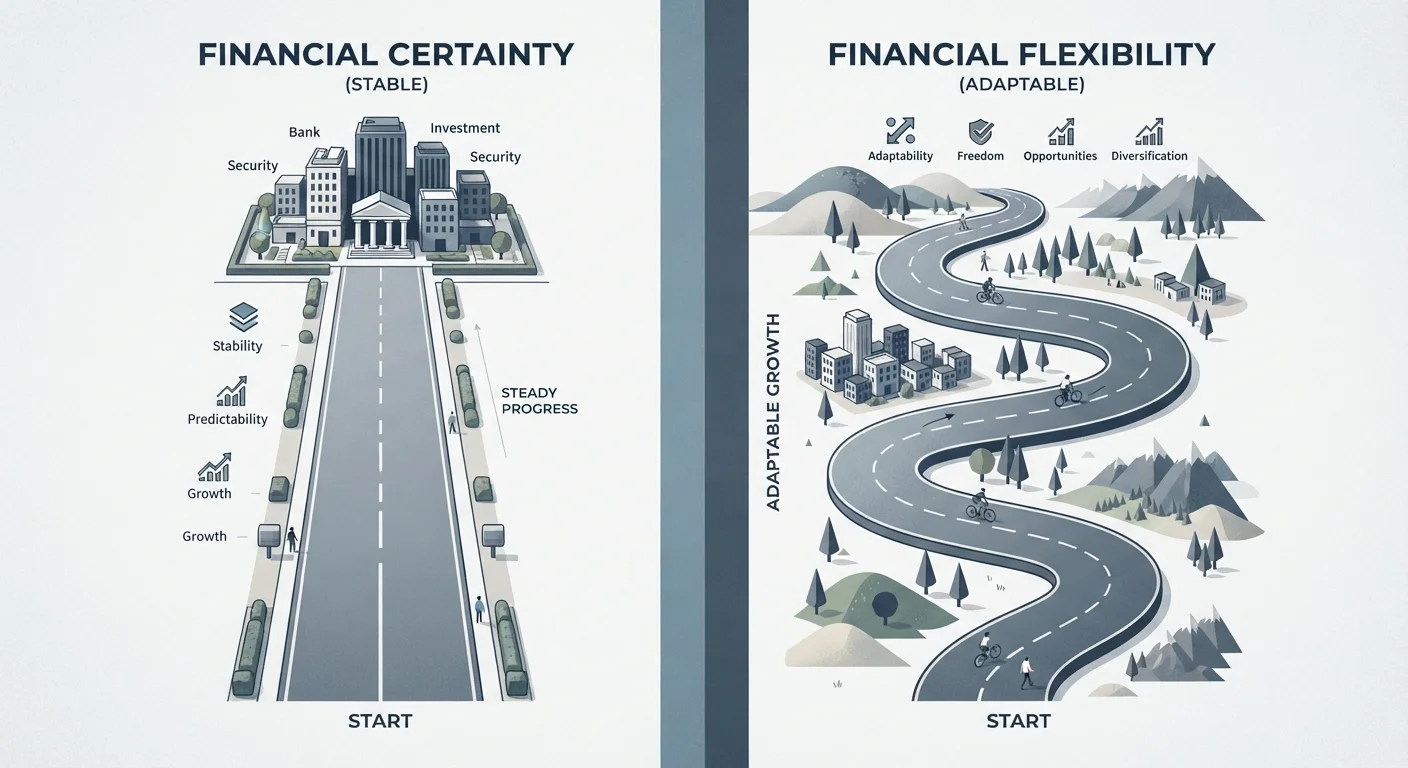
Photo credit: NewBizBuzz.net | Financial Insights For All
In this article
Fixed and variable interest rates suit different financial situations. Here's how each works and what conditions favour one over the other.
Key Takeaways
- Fixed rates lock in your interest cost for the loan term, providing payment certainty regardless of market movements.
- Variable rates move with a benchmark index, meaning payments can rise or fall as monetary policy shifts.
- Fixed rates typically start higher than variable rates but eliminate exposure to rate increases.
- Variable-rate products often suit shorter borrowing horizons or falling interest-rate environments.
- The right structure depends on your income stability, risk tolerance, and how long you plan to hold the debt.
- Consult a licensed financial adviser before committing to a rate structure for significant borrowing decisions.
How Each Rate Structure Works
A fixed interest rate remains constant for the agreed loan term. Whether you hold the debt for two years or thirty, the rate set at origination governs every payment. This insulates borrowers from benchmark rate movements — upward or downward — for the life of the loan.
A variable interest rate (also called a floating or adjustable rate) is tied to a reference index — commonly the SOFR in the US or the prime rate — plus a lender-set margin. As the index moves, so does your rate and, consequently, your required payment. Adjustments typically occur monthly, quarterly, or annually depending on product terms.
For mortgage-specific considerations, see our comparison of fixed and adjustable-rate mortgages, which explores how these structures behave across different loan-to-value and market-rate environments. The same foundational logic applies across personal loans and lines of credit.
| Criterion | Fixed-Rate Borrowing | Variable-Rate Borrowing |
|---|---|---|
| Rate stability | Constant for loan term | Fluctuates with benchmark index |
| Starting rate | Typically higher | Typically lower |
| Payment predictability | High — same each period | Low — adjusts periodically |
| Rate-rise exposure | None — fully hedged | Full exposure to market moves |
| Rate-fall benefit | None — requires refinancing | Automatic cost reduction |
| Best horizon | Long-term (10–30 years) | Short-term or flexible repayment |
| Budgeting ease | Simple — fixed outlay | Requires payment buffer planning |
Risk, Cost, and the Rate Environment
Fixed rates carry a liquidity premium: lenders accept interest-rate risk on your behalf, so they typically price fixed products higher than variable alternatives at origination. The spread between fixed and variable rates widens when lenders anticipate rising rates and narrows — or even inverts — when rate expectations are subdued.
Variable-rate borrowers absorb market risk in exchange for a lower starting rate. This trade-off is meaningful over short horizons. On longer commitments such as 30-year mortgages, even modest upward rate drift compounds into substantially higher total interest paid.
1–2%
Typical fixed-variable rate spread at origination
Historically, fixed-rate mortgage products in the US have priced roughly 1–2 percentage points above comparable variable-rate products, though spreads vary with market conditions.
~$60K
Estimated additional interest on a 30-year $400K loan at 1.5% rate difference
A 1.5 percentage point difference in rate on a $400,000 30-year mortgage can translate to approximately $60,000 in additional total interest — illustrating the long-term cost significance of rate structure.
5–7 years
Average time US homeowners hold a mortgage before refinancing or selling
Industry data suggests many borrowers do not hold mortgages to full term, which affects how meaningful long-term fixed-rate protection actually is in practice.
The decision is also contextual to the broader rate cycle. When central bank policy rates are elevated and consensus anticipates cuts, variable-rate products become comparatively attractive because the borrower stands to benefit automatically. Conversely, when rates are near cyclical lows, locking in a fixed rate preserves the favourable environment regardless of future policy shifts.
Understanding how your debt is secured also shapes this calculation. Secured and unsecured loans carry different baseline risk profiles, and rate structures interact with collateral requirements in ways that affect both pricing and borrower exposure.
Matching Rate Structure to Your Borrowing Situation
No rate structure is universally superior. The right choice aligns with your repayment horizon, income stability, and tolerance for payment volatility.
- Long-term, large-balance debt (e.g., primary mortgages): Fixed rates reduce the compounding risk of rate increases over decades. For further context on how rate type interacts with loan structure on home loans, see our mortgages resource hub.
- Short-term or revolving credit: Variable rates are common on products such as home equity lines of credit (HELOCs) and credit cards. Since these balances can be repaid quickly, shorter rate exposure reduces the risk. Our guide to credit card interest structures provides relevant context.
- Income stability: Borrowers with salaried, predictable income may tolerate variable-rate fluctuation more easily than those with commission-based or seasonal earnings.
- Refinancing optionality: Some variable-rate products include caps — per-adjustment and lifetime limits — that constrain how far rates can move. Review these terms carefully before assuming worst-case exposure.
Variable-Rate Caps: Know Your Limits
Many variable-rate products — particularly adjustable-rate mortgages — include built-in rate caps that limit how much the rate can increase per adjustment period and over the life of the loan. A common structure might cap per-adjustment increases at 2% and lifetime increases at 5–6% above the starting rate. These caps provide a defined worst-case scenario, which should factor into any affordability assessment before choosing a variable structure.
For mortgage borrowers also evaluating repayment structure alongside rate type, the comparison of interest-only and repayment mortgages outlines how structural choices layer on top of rate decisions.
This article is general financial information only and does not constitute personalised financial or lending advice. Interest rates, product terms, and eligibility criteria vary by lender and individual circumstances. Consult a licensed financial adviser or mortgage professional before making borrowing decisions.

Author
Credit & Lending Editorial Team
Credit & Lending Editorial Team is the collective byline for our editorial team and contributor network. Articles published under this byline or an editorial pen name are researched, written, and reviewed according to our editorial standards for clarity, consistency, and independence before publication.
View all articles →