
Personal Loans vs Lines of Credit: Matching the Right Tool to the Right Need
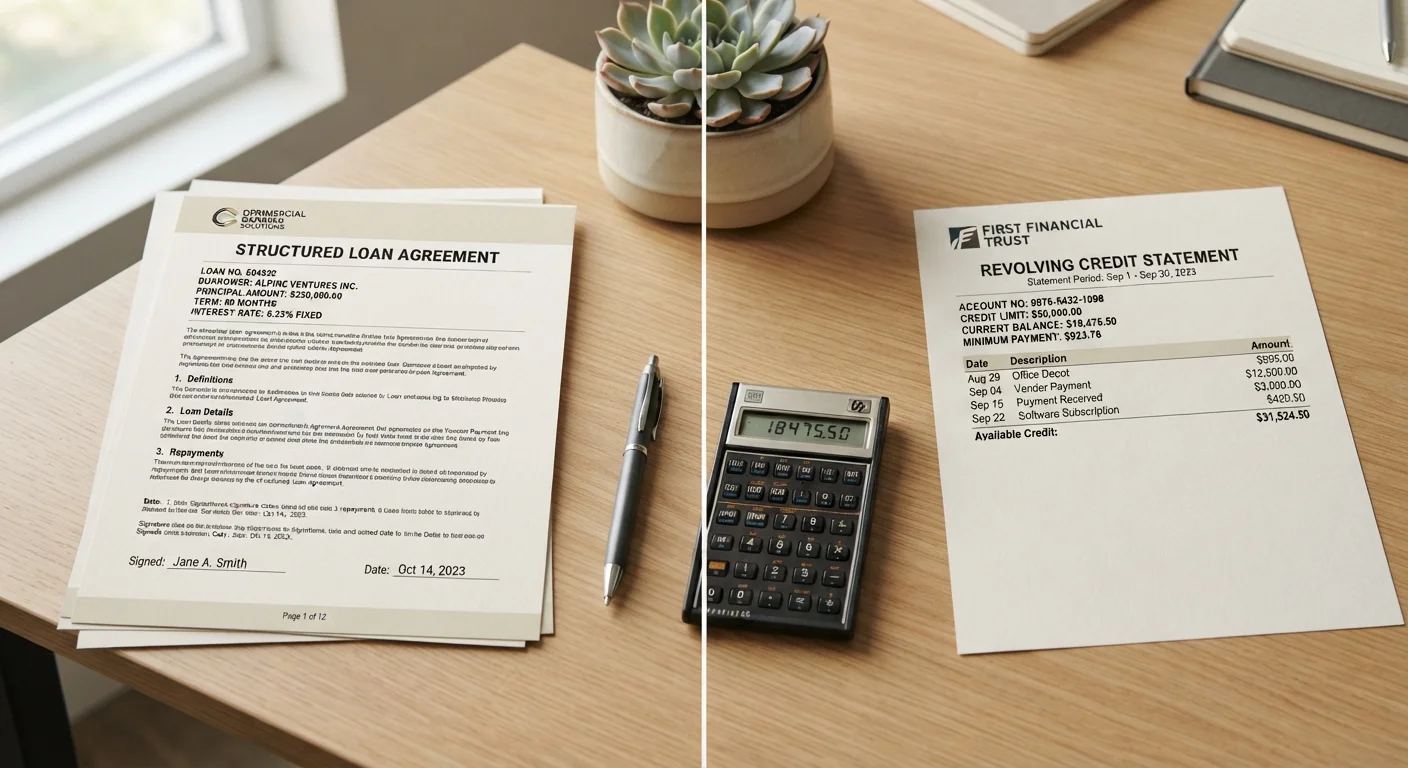
Photo credit: NewBizBuzz.net | Financial Insights For All
In this article
Personal loans and credit lines serve different purposes. Here's how to distinguish them and decide which fits your borrowing need.
Key Takeaways
- Personal loans deliver a fixed lump sum repaid on a set schedule — ideal for defined, one-time expenses.
- Lines of credit offer revolving access to funds, making them better suited for ongoing or unpredictable costs.
- Interest rate structures differ: personal loans are typically fixed, while credit lines usually carry variable rates.
- Your borrowing need — not the product's marketing — should drive which structure you choose.
- Both products affect your credit profile differently; understanding the mechanics helps you borrow strategically.
How Each Product Is Structured
A personal loan disburses a fixed sum upfront. You repay it in equal monthly installments over a predetermined term — commonly two to seven years — at an interest rate that is almost always fixed. From the moment funds hit your account, the clock is running: interest accrues on the full principal balance, and your monthly obligation is set. For a plain-language breakdown of terms like APR, origination fees, and amortisation, see the Loan Terminology Reference.
A personal line of credit works more like a reservoir. The lender approves a credit limit, and you draw against it as needed — once, or repeatedly — during a defined draw period. Interest accrues only on the outstanding balance, not the full limit. Most lines carry variable rates tied to a benchmark such as the prime rate, which means your cost of borrowing can shift over time. For a deeper look at how rate structures compare, see our article on fixed-rate vs variable-rate borrowing.
| Personal Loan | Line of Credit | |
|---|---|---|
| Fund disbursement | Lump sum upfront | Draw as needed up to limit |
| Interest rate type | Typically fixed | Typically variable |
| Interest accrual | On full principal from day one | Only on drawn balance |
| Repayment structure | Fixed monthly installments | Flexible; minimum payment on balance |
| Best for | Defined, one-time expenses | Phased or unpredictable costs |
| Predictability | High — set term and payment | Lower — rate and balance can vary |
| Credit utilization impact | Installment — lower utilization impact | Revolving — affects utilization ratio |
When a Personal Loan Is the Stronger Choice
Personal loans are purpose-built for discrete, well-defined expenses. If you can answer the question "How much do I need?" with a precise figure, a personal loan's structure rewards that certainty. Common use cases include:
- Debt consolidation: Rolling multiple higher-rate balances into a single fixed-rate installment loan can simplify repayment and potentially reduce interest costs. See our comparison of balance transfer cards vs. personal loans for paying off debt for a detailed side-by-side.
- Major one-time purchases: Medical procedures, moving costs, or planned home repairs with known contractor quotes are well-matched to a lump-sum structure.
- Predictable budgeting: Because the monthly payment is fixed from day one, personal loans integrate cleanly into a household budget.
Get Specific Before You Apply
Before choosing between a personal loan and a line of credit, document your expense as precisely as possible. If you can itemise the full cost, a personal loan's fixed structure is likely the cleaner fit. If your total need is genuinely uncertain — as with a renovation or a business ramp-up — a line of credit's flexibility may justify its variable-rate risk. Precision in your planning narrows the decision considerably.
One structural consideration: personal loans often carry origination fees deducted from the disbursed amount, so factor that cost into your effective borrowing rate when comparing options.
When a Line of Credit Is the Stronger Choice
Lines of credit are optimized for financial situations where the total need is uncertain, spending is phased, or access to funds must remain flexible over time. Key scenarios include:
- Multi-stage projects: A home renovation that unfolds in phases — foundation work, then electrical, then finishing — benefits from draw-as-needed access rather than sitting on a large idle balance accruing interest.
- Emergency reserves: A personal line of credit can serve as a structured buffer for unexpected costs, though it requires disciplined repayment to avoid compounding variable-rate interest.
- Irregular income cycles: Self-employed borrowers or those with seasonal income may find revolving access more practical than a fixed disbursement tied to a specific moment.
Variable Rates Can Compound Quickly
Lines of credit tied to variable benchmarks can become significantly more expensive if rates rise during your draw or repayment period. Borrowers who carry a persistent balance on a line of credit without a structured paydown plan risk escalating interest costs that erode the flexibility advantage. Treat a line of credit as a tool with a repayment plan, not as indefinitely cheap liquidity.
Lines of credit share structural DNA with revolving credit products like credit cards — understanding the distinctions matters. The broader credit cards hub covers how revolving credit affects interest, credit utilization, and long-term credit health.
Credit Impact and Long-Term Considerations
Both products generate a hard inquiry at application and appear on your credit report as open accounts. However, their credit-utilization dynamics differ. Personal loans are installment accounts — bureaus track how much of the original balance remains, but utilization ratios (significant for revolving credit) do not apply in the same way. Lines of credit, as revolving facilities, do affect your revolving utilization ratio, which can influence scores more immediately.
Repayment discipline is critical for both, but the risk profile differs. A personal loan's fixed schedule enforces repayment. A line of credit's flexibility can tempt borrowers to carry a persistent balance, particularly when rates are variable and trending upward. The complete guide to borrowing and debt management addresses how to build a repayment strategy that serves long-term credit health regardless of which product you use.
If collateral is part of your evaluation — for instance, a home equity line of credit versus an unsecured personal loan — the risk calculus changes meaningfully. Our overview of secured vs. unsecured loans outlines those trade-offs in detail.
This article is for general informational and educational purposes only and does not constitute personalised financial, credit, or legal advice. Borrowing decisions depend on individual circumstances. Consult a licensed financial adviser or credit counsellor before taking on new debt.

Author
Credit & Lending Editorial Team
Credit & Lending Editorial Team is the collective byline for our editorial team and contributor network. Articles published under this byline or an editorial pen name are researched, written, and reviewed according to our editorial standards for clarity, consistency, and independence before publication.
View all articles →