
Coverage Gaps That Catch People Off Guard
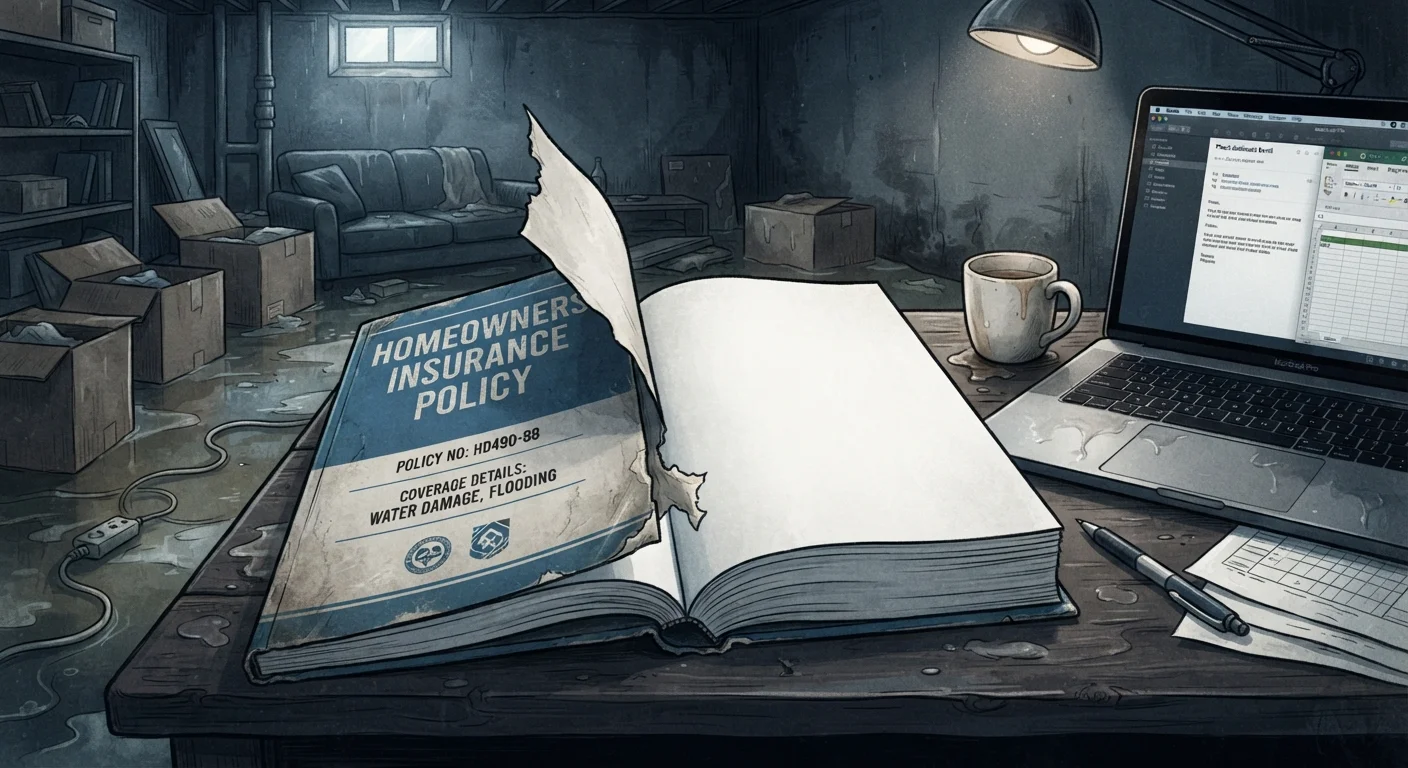
Photo credit: NewBizBuzz.net | Financial Insights For All
In this article
Floods, cyber theft, home-based businesses — many common risks fall outside standard policies. Know where protection typically ends.
Key Takeaways
- Standard homeowners policies typically exclude flood and earthquake damage by default.
- Home-based business equipment and liability are rarely covered under personal homeowners policies.
- Personal auto policies usually exclude vehicles used for rideshare or delivery work.
- Cyber theft and identity fraud losses require separate or endorsed coverage to be protected.
- Umbrella policies have their own exclusions and do not fill every gap in underlying policies.
- Reading your actual policy declarations and exclusions page is the only reliable way to know what is covered.
Why Standard Policies Leave Predictable Holes
Insurance is designed around statistical averages and defined risk categories. When your situation falls outside that average — a side business, a high-risk geography, or a modern threat like cyber fraud — standard policy language often stops short. The result is a coverage gap: a loss you assumed was protected that turns out not to be.
These gaps are not hidden in fine print for deceptive reasons. They exist because insurers price policies around specific, defined perils. Extending that coverage requires a separate policy or an endorsement (a formal modification added to an existing policy). The problem is that most policyholders never discover those limits until a claim is denied.
The list below walks through the most common gaps that catch people off guard — not to alarm, but to help you ask better questions of your agent and read your declarations page with sharper eyes. For a broader foundation, see our guide to health, life, auto, and property coverage and our deep-dive on common policy exclusions.
Endorsements vs. Separate Policies
An endorsement (sometimes called a rider) is a formal modification to an existing policy that adds, removes, or changes coverage terms. A separate policy is a standalone contract for a distinct risk. Some gaps — like scheduling a piece of jewelry — are easily addressed with an endorsement. Others — like flood or earthquake — typically require a completely separate policy. Understanding the difference helps you ask the right questions when reviewing coverage options with a licensed agent.
Common Coverage Gaps to Know
Flood Damage
Standard homeowners policies — and most renters policies — do not cover flood damage. This surprises many policyholders because water damage from a burst pipe is typically covered, but water entering from outside the home (storm surge, overflowing rivers, heavy rainfall) is treated as a separate peril requiring a separate policy.
Flood insurance in the U.S. is largely available through the federally backed National Flood Insurance Program (NFIP), though some private insurers offer standalone flood policies. Importantly, flood risk is not limited to coastal or riverside properties — urban drainage failures and flash flooding affect inland areas too. See how catastrophic events are treated differently in our article on catastrophic risk and personal insurance.
Flood damage from outside the home is almost never covered by a standard homeowners policy.
Earthquake Damage
Like flood, earthquake damage is explicitly excluded from standard homeowners and renters policies. Earthquake coverage must be purchased separately or added as an endorsement, and premiums vary considerably based on location and the structural characteristics of the home.
This gap matters beyond the obvious high-risk states. Seismic activity occurs across a wider geographic range than most people assume, and even moderate events can cause significant structural damage. Building ordinance and code upgrade costs — which can be substantial after a major event — are yet another layer of coverage that requires its own endorsement.
Earthquake coverage is a separate purchase, not an automatic feature of any standard policy.
Home-Based Business Activities
If you operate any kind of business from your home — consulting, selling products, seeing clients — your homeowners policy likely treats that activity as outside its scope. Business equipment stored at home may have only minimal coverage (often capped at $2,500 or less), and business liability — such as a client injured during a home visit — is typically excluded entirely.
A home-based business endorsement or a separate Business Owner's Policy (BOP) can address this, but the right solution depends on business type, revenue, and client interaction. This is an area where liability coverage across policy types becomes especially relevant.
Running even a small business from home can invalidate liability protection under a personal homeowners policy.
Rideshare and Delivery Driving
Personal auto insurance policies generally exclude commercial use of a vehicle. Driving for a rideshare or delivery platform — even part-time — creates a coverage gap that sits between the platform company's policy and your personal policy. Platform policies often only activate once a passenger or delivery order is accepted, leaving the period when the app is on but no ride is matched in a grey zone.
Some insurers now offer rideshare endorsements that bridge this gap. If you use your personal vehicle for any paid driving, verify explicitly how your personal policy treats that use.
The gap between app-on and ride-accepted is where personal auto coverage typically goes silent.
Cyber Theft and Identity Fraud
Financial losses from cyber theft — account takeovers, phishing schemes, ransomware on personal devices — are generally not covered by standard homeowners or renters policies, and are not covered by health or auto policies at all. Some homeowners policies include a small identity fraud expense benefit, but this rarely covers direct financial losses.
Standalone cyber insurance products and identity theft protection endorsements exist for personal use, but coverage scope varies widely. If you hold significant financial accounts or conduct business online, reviewing cyber exposure is worth a conversation with a licensed agent. Protecting digital assets is increasingly part of a broader wealth protection strategy.
Direct financial losses from cyber theft fall outside the scope of most personal insurance policies.
High-Value Personal Property
Standard homeowners and renters policies set per-item and per-category limits on personal property — commonly capping jewelry at $1,500, firearms at $2,500, and fine art at variable amounts. If you own items that exceed those sub-limits, the excess value is uninsured unless you schedule those items separately (a process called scheduling, or adding a floater).
Scheduled personal property endorsements cover specific items at agreed or appraised value, often with broader coverage including accidental loss. The key step is getting items appraised and listed on the policy — insurers cannot cover what they don't know exists. See homeowners vs. renters insurance coverage details for more on personal property limits.
Jewelry, art, and collectibles above policy sub-limits are effectively uninsured without a scheduled endorsement.
One Simple Annual Habit
Set a yearly reminder to review your policy declarations page alongside any changes in your life — a new side income, a renovation, a valuable purchase, or a change in how you use your vehicle. Coverage needs shift over time, and policies do not update automatically to reflect them. A 30-minute review with your agent each year can close gaps before a claim makes them visible.
Turning Awareness Into Action
Identifying a potential gap is the first step; addressing it is the second. In most cases, solutions exist — a separate flood policy through the National Flood Insurance Program, a home-based business endorsement, a rideshare gap policy, or a standalone cyber insurance product. What these solutions share is that they require a deliberate decision, not passive enrollment.
Start by pulling out your current policy declarations page and reading the exclusions section carefully. Then compare it against your actual life: Do you work from home? Do you drive for a platform app? Have you recently renovated and increased your home's replacement value? Each of these changes can quietly shift your risk exposure without changing your policy. For more on how underinsurance develops gradually, see why people end up underinsured.
Coverage decisions should reflect your specific situation, risk tolerance, and financial position. This article is general educational information — not personalised insurance or financial advice. Coverage terms, exclusions, and availability vary by insurer, policy, and state. Consult a licensed insurance agent or adviser before making changes to your coverage.
This article is for informational purposes only and does not constitute personalised insurance, financial, or legal advice. Policy terms and availability vary by provider and jurisdiction. Always read your actual policy documents and speak with a licensed insurance professional about your individual circumstances.

Author
Insurance Explained Editorial Team
Insurance Explained Editorial Team is the collective byline for our editorial team and contributor network. Articles published under this byline or an editorial pen name are researched, written, and reviewed according to our editorial standards for clarity, consistency, and independence before publication.
View all articles →