Search
Enter at least 3 characters
Principles and metrics used to assess the fair value of individual stocks.
Updated daily · 15 stories

By Stocks & Markets Editorial Team · 7 min read
Use this structured checklist to pressure-test a valuation thesis—covering earnings quality, debt levels, competitive po…
New to reading financial statements and valuation ratios? This structured introduction covers the foundational concepts …
Explore the key differences between intrinsic value analysis and relative valuation methods, and when each approach tend…
The metrics that matter for a high-growth tech company look very different from those used for a mature dividend payer. …
P/E and P/B ratios answer different questions about a stock's value. See which metric fits which type of company and why…
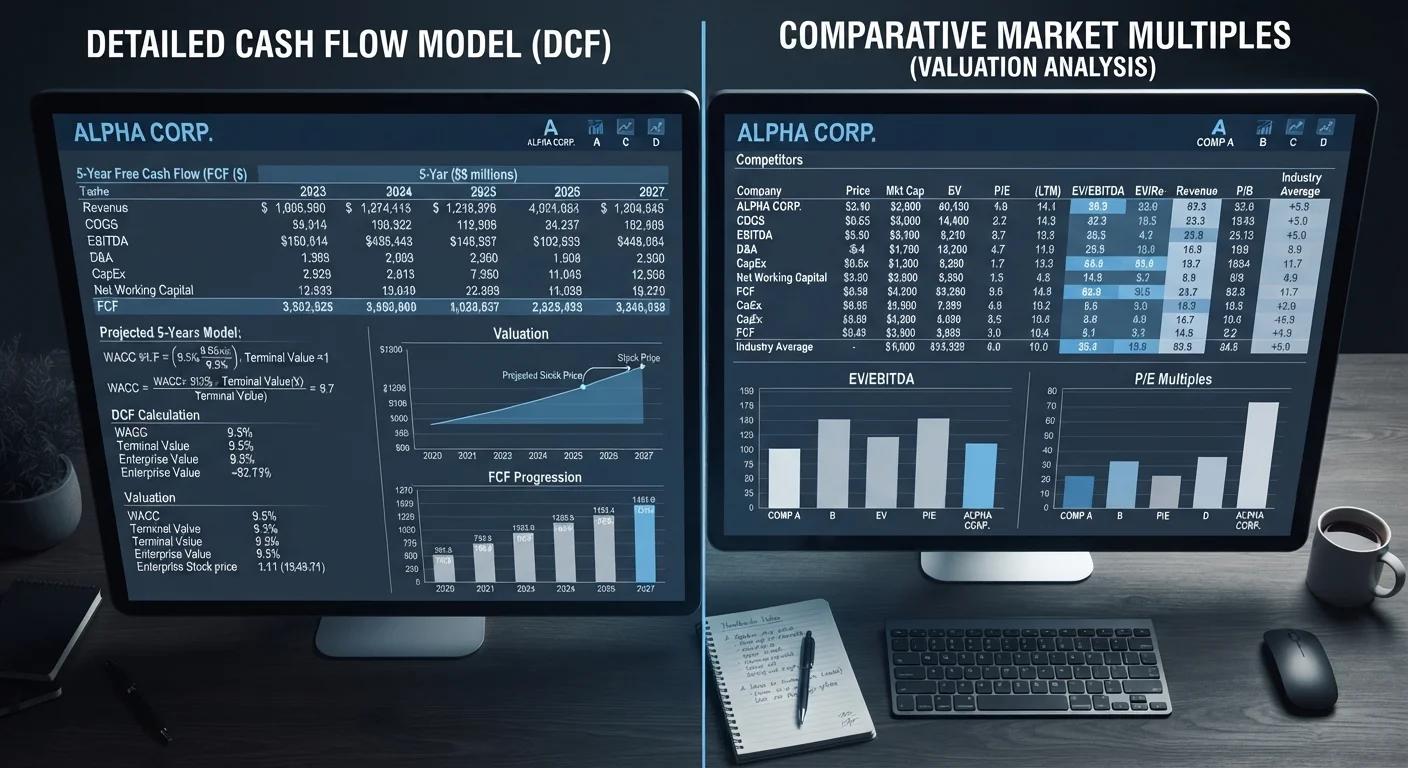
DCF analysis is powerful but often misunderstood. Learn what the inputs mean, where the model is fragile, and how to int…
Banks, utilities, REITs, and tech firms each use different valuation yardsticks. A look at why one-size metrics rarely f…
Experienced analysts follow consistent frameworks, not gut instinct. Explore the disciplines and routines that underpin …
Understand what stock valuation is, why it matters, and how investors use it to assess whether a share price reflects a …
From intrinsic value models to market multiples and qualitative factors—a thorough, end-to-end resource for investors wh…
A quick-reference glossary of core valuation metrics—P/E, P/B, EV/EBITDA, and more—with plain-language definitions for e…
EV/EBITDA is widely used in equity research, but it carries real limitations. Understand what it captures well and where…
From anchoring on a single ratio to ignoring capital structure, these are the analytical missteps that cause investors t…
A cheap-looking P/E can mask earnings risk, sector dynamics, or accounting distortions. Learn what else to examine befor…