
The Real Cost of Carrying a Balance on a Personal Loan
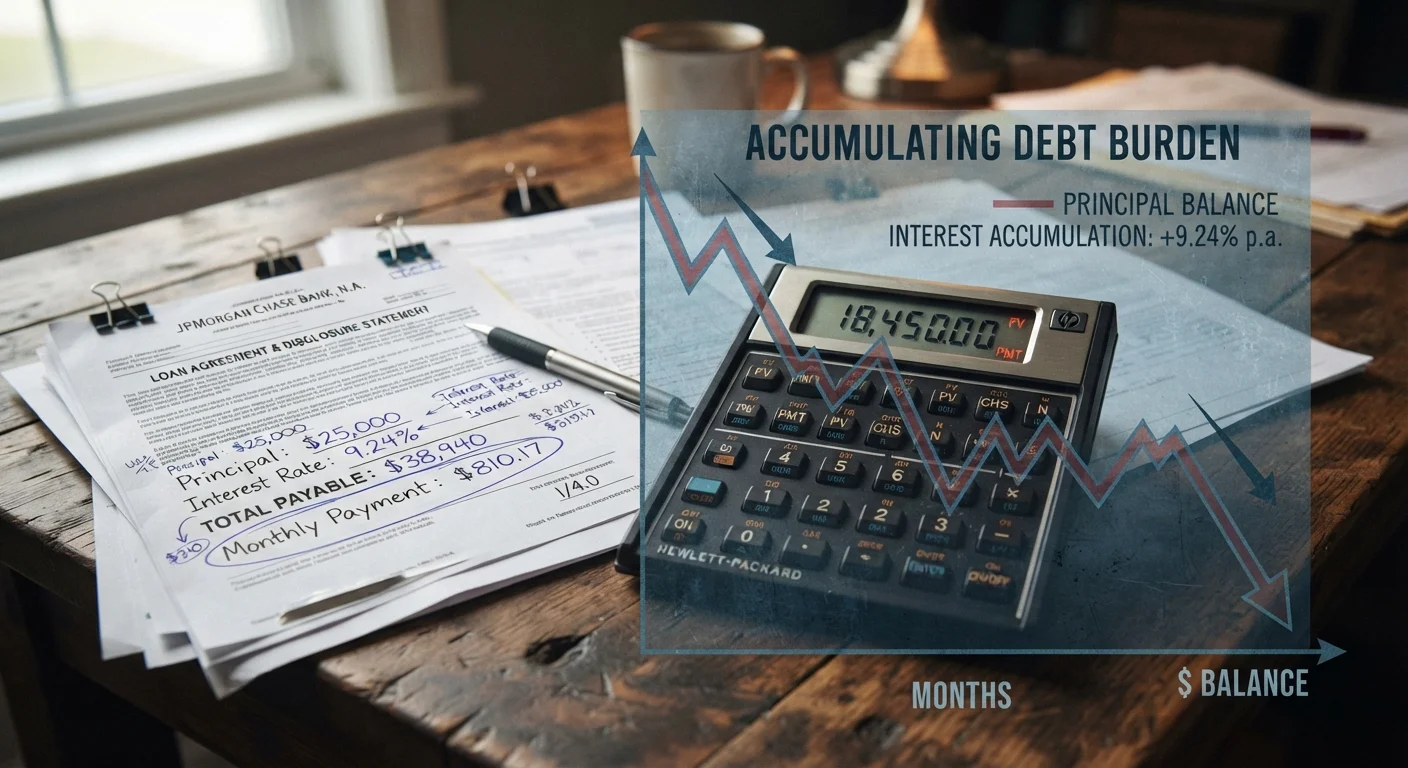
Photo credit: NewBizBuzz.net | Financial Insights For All
In this article
Interest compounds quickly. Explore how loan balances grow over time and what that means for your total repayment burden.
Key Takeaways
- Interest on personal loans accrues on the outstanding principal every month, compounding your total repayment burden over time.
- The annual percentage rate (APR) — not just the nominal rate — reflects the true annualised cost of borrowing.
- Stretching a loan term lowers monthly payments but significantly increases total interest paid over the life of the loan.
- Making extra principal payments early in the loan term has an outsized effect on reducing total interest costs.
- Understanding amortisation schedules helps borrowers see exactly how much of each payment covers interest versus principal.
How Interest Accumulates on a Personal Loan
When you take out a personal loan, the lender sets an interest rate that determines how much you pay for access to that capital. Unlike credit cards, most personal loans charge simple interest on the outstanding principal — but that doesn't mean the cost is trivial. Each month, interest is calculated on whatever balance remains, and because early loan payments are weighted heavily toward interest rather than principal, progress toward payoff can feel slow.
To understand the real cost, it helps to look at how amortisation works. How amortisation structures your monthly payments determines the precise split between interest and principal at every stage of the loan term. In the opening months, the interest share is at its highest. Over time, as the principal shrinks, more of each payment reduces the balance — but only if you stay on schedule.
~$2,000+
Extra interest on a 60-month vs. 36-month loan
Illustrative estimate on a $15,000 loan at 12% APR; actual figures vary by lender and borrower terms.
20%+
Average APR on personal loans for subprime borrowers
Federal Reserve consumer credit data indicates borrowers with lower credit scores routinely face APRs exceeding 20%, significantly elevating carrying costs.
67%
Increase in total interest: 36-month vs. 60-month term
Based on illustrative calculations for a $15,000 loan at 12% APR; intended to demonstrate the term-length effect on total repayment cost.
The Compounding Effect of Loan Term Length
Choosing a longer repayment term is one of the most common ways borrowers unwittingly increase their total cost. A 60-month personal loan at a given rate will generate significantly more total interest than a 36-month loan at the same rate, even though the monthly payment is lower. The difference isn't marginal — it can amount to hundreds or thousands of dollars depending on the loan size.
Consider a $15,000 personal loan at a 12% APR. On a 36-month term, the borrower pays roughly $3,000 in total interest. Stretch that to 60 months, and the total interest burden climbs to approximately $5,000 — a 67% increase in the cost of borrowing for the privilege of a lower monthly payment. These figures are illustrative and will vary based on exact loan terms.
Extra Principal Payments Reduce Total Cost
If your loan agreement does not include a prepayment penalty, directing even modest additional amounts toward principal each month can meaningfully reduce total interest paid. Check your loan terms first — some lenders apply extra payments to future interest rather than principal unless you specify otherwise in writing.
This trade-off is explored in detail when examining how amortisation schedules shift over a loan's life — a dynamic that applies equally to personal loans and mortgages alike.
Minimum Payments and the Debt Persistence Problem
Personal loans, unlike revolving credit, are structured with fixed monthly payments rather than a minimum payment floor. However, borrowers who refinance repeatedly, defer payments, or accept forbearance arrangements can inadvertently recreate a similar dynamic. The principal barely shrinks while interest continues to accrue, extending the repayment timeline and total cost.
This mirrors the problem well-documented in revolving credit products. As explored in why minimum payments keep borrowers in debt longer, any payment structure that prioritises short-term cash flow over principal reduction prolongs the debt cycle and inflates total repayment cost.
For borrowers considering debt consolidation, it's also worth understanding the differences between products. Comparing balance transfer cards and personal loans for debt payoff provides a framework for evaluating which tool suits a given situation — because the wrong instrument can perpetuate, rather than resolve, a balance-carrying problem.
This article provides general financial information and education only. It is not personalised financial, investment, or legal advice. Readers should consult a qualified financial adviser before making decisions about their own borrowing circumstances.
Frequently Asked Questions

Author
Credit & Lending Editorial Team
Credit & Lending Editorial Team is the collective byline for our editorial team and contributor network. Articles published under this byline or an editorial pen name are researched, written, and reviewed according to our editorial standards for clarity, consistency, and independence before publication.
View all articles →