
Loan Terminology Reference: Definitions Every Borrower Needs
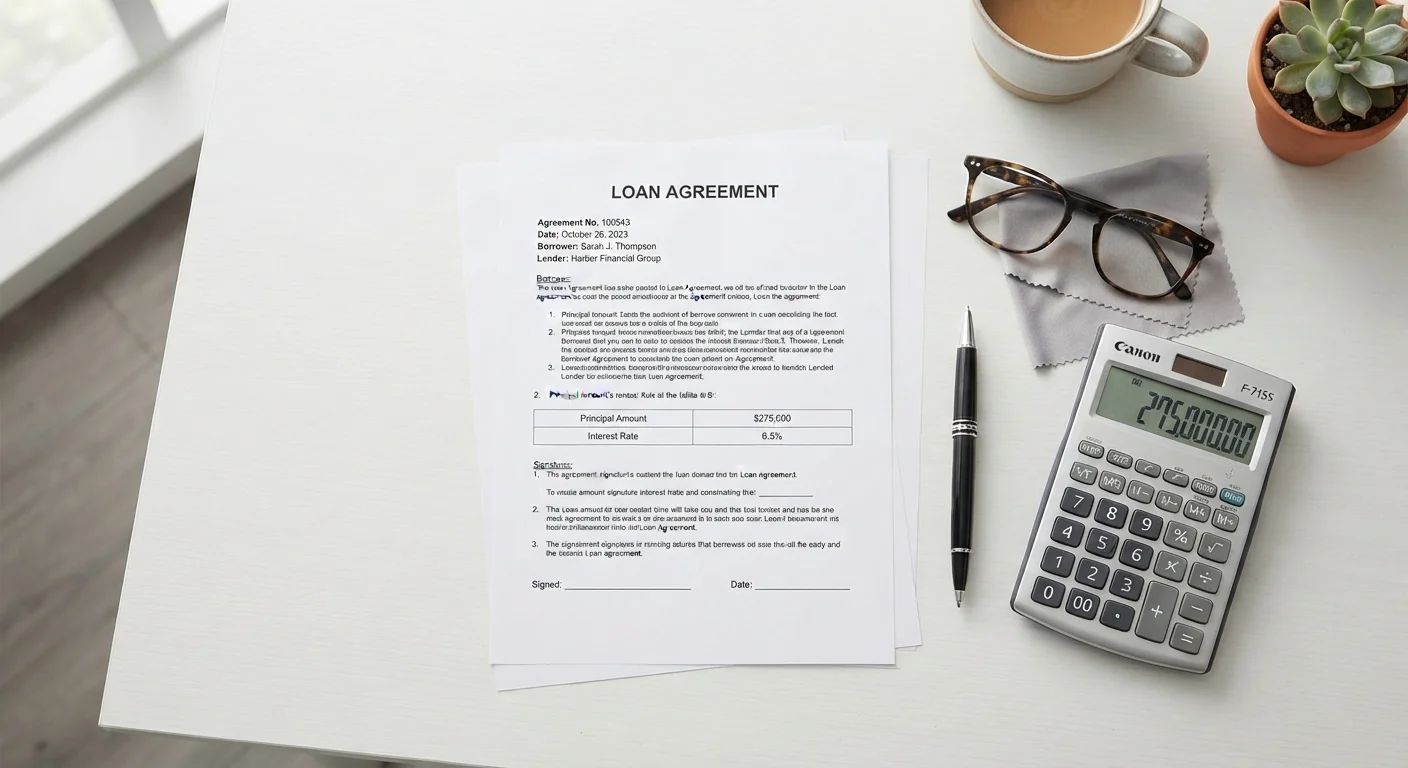
Photo credit: NewBizBuzz.net | Financial Insights For All
In this article
APR, amortisation, origination fee, balloon payment—this plain-language glossary covers the key terms in any loan agreement.
Why Loan Vocabulary Matters Before You Sign
Every loan agreement arrives with a dense layer of terminology that shapes your actual cost of borrowing — not just the headline interest rate. Misreading a single clause can mean paying thousands more than anticipated or missing a prepayment penalty buried in the fine print. This reference covers the core terms found across personal loans, auto loans, and home mortgages. For mortgage-specific vocabulary, see the Mortgage Glossary: 40 Terms Every Borrower Should Know.
Annual Percentage Rate (APR)
The annualised cost of a loan expressed as a percentage, incorporating both the interest rate and lender fees. APR enables more accurate comparisons between loan offers than the nominal interest rate alone.
Amortisation
The process of repaying a loan through scheduled, fixed payments that cover both principal and interest. In the early months, a greater share of each payment goes to interest; over time, the balance shifts toward principal reduction.
Principal
The original sum of money borrowed, excluding interest or fees. As payments are made, the outstanding principal declines and becomes the base on which future interest is calculated.
Origination Fee
A upfront charge by the lender to process and underwrite a loan, typically expressed as a percentage of the loan amount. It may be paid at closing or rolled into the loan balance.
Balloon Payment
A large, one-time payment due at the end of a loan term after a period of smaller regular payments. Loans structured this way carry refinancing risk if the borrower cannot pay the lump sum when due.
Prepayment Penalty
A fee imposed by some lenders when a borrower repays all or part of a loan ahead of the agreed schedule. It protects the lender's expected interest income but can reduce the benefit of early payoff for the borrower.
Debt-to-Income Ratio (DTI)
A measure lenders use to assess creditworthiness, calculated by dividing total monthly debt obligations by gross monthly income. Most conventional lenders prefer a DTI below 43%.
Loan-to-Value Ratio (LTV)
The ratio of the loan amount to the appraised value of the collateral, expressed as a percentage. Higher LTV ratios typically result in higher rates, stricter approval criteria, or requirements for mortgage insurance.
Collateral
An asset pledged to secure a loan. If the borrower defaults, the lender may seize and sell the collateral to recover outstanding amounts. Common examples include real estate and vehicles.
Grace Period
A window of time after a payment due date during which a borrower may make a payment without incurring a late fee or credit penalty. Grace period length varies by lender and loan type.
Default
The failure to meet the legal obligations of a loan agreement — typically by missing a specified number of payments. Default can trigger collection actions, asset seizure for secured loans, and lasting damage to a borrower's credit profile.
Fixed vs. Variable Rate
A fixed rate remains constant for the life of the loan; a variable (or adjustable) rate fluctuates based on a benchmark index. Fixed rates offer payment predictability; variable rates carry the risk of rising costs if market rates increase.
This article provides general financial education and is not a substitute for personalised advice from a licensed financial professional. Loan terms and regulations vary by lender and jurisdiction.
Core Loan Terms at a Glance
| Average personal loan APR range (US) | Approximately 8%–36% (Federal Reserve Consumer Credit data) |
| Typical origination fee range | 1%–8% of loan amount (Consumer Financial Protection Bureau guidance) |
| Standard maximum DTI for conventional mortgages | 43% (Fannie Mae/Freddie Mac underwriting guidelines) |
| Loan terms for personal loans | 12–84 months (most common) (Industry-standard lending practice, US market) |
| LTV threshold to avoid PMI on conventional mortgages | 80% or below (Standard US mortgage industry practice) |
These figures help frame the broader lending landscape. Once you understand the categories, the individual terms below build naturally on one another.
Rate vs. Cost: A Critical Distinction
Many borrowers focus on the nominal interest rate when comparing loan offers, but the Annual Percentage Rate (APR) is the more complete measure — it folds in fees and other financing charges to express the true annual cost. A loan advertised at a low rate can carry a substantially higher APR once origination fees and mandatory charges are included. For a deeper look at how interest accrues over a loan's life, see How Amortisation Works and What It Means for Your Monthly Payments.
Secured vs. Unsecured Loans
A secured loan is backed by collateral — an asset the lender can claim if you default. Mortgages and auto loans are secured; the property or vehicle serves as collateral. Unsecured loans, such as most personal loans, carry no collateral, which typically results in higher interest rates to compensate lenders for additional risk. Understanding this distinction matters when evaluating approval criteria, rates, and consequences of non-payment. Credit card terms follow a parallel but distinct vocabulary — see Credit Card Terminology Every Cardholder Should Recognise for comparison.
Fee and Repayment Terms You'll Encounter
Beyond interest, lenders assess a range of fees that affect your out-of-pocket costs and the effective cost of the loan.
- Origination fee: A one-time charge — often 1%–8% of the loan amount — that lenders deduct upfront or add to the balance to cover processing costs. Always factor this into APR comparisons.
- Prepayment penalty: A fee charged if you pay off a loan ahead of schedule. Not all loans carry one, but those that do can neutralise the interest savings from early payoff.
- Balloon payment: A large lump-sum payment due at the end of a loan term, common in some commercial and short-term personal loans. Borrowers who reach this date without refinancing or sufficient savings face significant financial pressure.
- Late payment fee: A penalty assessed when a scheduled payment is not received by the due date or within the grace period. Repeated late payments also affect your credit profile.
Loan Terms Vary Significantly by Lender
Even for the same loan type and borrower profile, fee structures, prepayment terms, and rate calculation methods can differ substantially between lenders. Always request and compare the Loan Estimate or Truth in Lending disclosure — not just the advertised rate — before committing. Consulting a licensed financial adviser or HUD-approved housing counselor can help clarify terms that are difficult to interpret independently.
Understanding the full structure of a loan — including fees, amortisation schedule, and any balloon provisions — is equally important in mortgage contexts. The Mortgage Anatomy article breaks down how each component of a home loan affects total borrowing cost.

Author
Credit & Lending Editorial Team
Credit & Lending Editorial Team is the collective byline for our editorial team and contributor network. Articles published under this byline or an editorial pen name are researched, written, and reviewed according to our editorial standards for clarity, consistency, and independence before publication.
View all articles →