
Inflation's Quiet Erosion: How Purchasing Power Loss Affects Long-Term Wealth
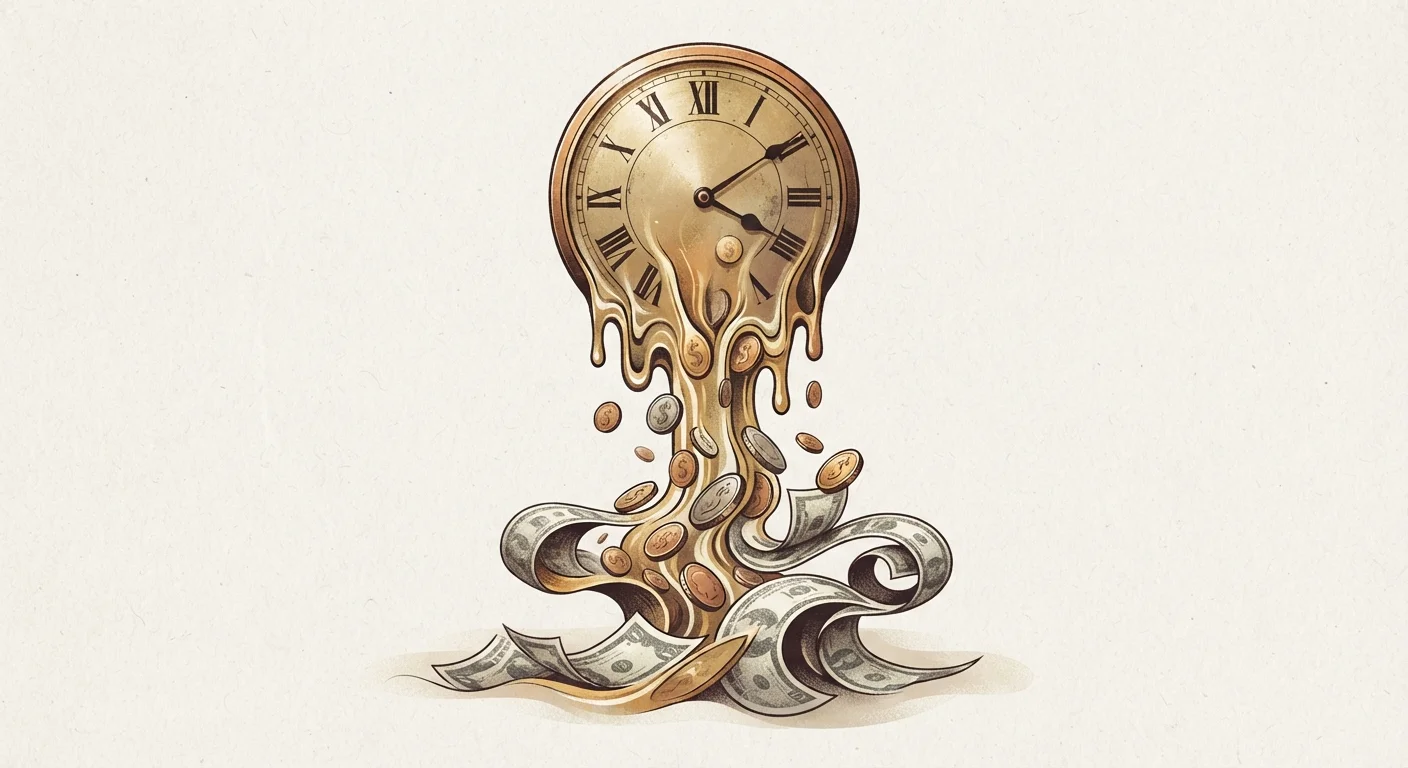
Photo credit: NewBizBuzz.net | Financial Insights For All
In this article
Inflation silently reduces real returns. Learn how to frame asset allocation decisions with purchasing power preservation in mind.
Key Takeaways
- Inflation reduces the real value of money even when nominal account balances appear stable or growing.
- A 3% annual inflation rate can halve purchasing power in roughly 24 years.
- Cash and low-yield fixed-income instruments are especially vulnerable to inflation erosion.
- Asset allocation decisions should account for real — not just nominal — return expectations.
- Diversification across inflation-sensitive asset classes is a foundational wealth-protection strategy.
- Consulting a qualified financial adviser is essential for tailoring an inflation-aware investment plan.
The Invisible Tax on Idle Capital
Most investors focus on what their money earns. Fewer focus on what inflation quietly takes away. Purchasing power loss is sometimes called an "invisible tax" because it requires no legislation, no market crash, and no dramatic event — only the steady upward movement of prices against static or slowly growing assets.
Consider a straightforward scenario: $500,000 held in a savings account earning 1% annually in an environment where inflation runs at 3%. After ten years, the nominal balance grows to roughly $552,000. In real terms, however, that money has lost meaningful purchasing power. The math is unforgiving over longer horizons. At 3% annual inflation, the rule of 72 suggests purchasing power is halved in approximately 24 years — a timeframe well within a typical retirement period.
This dynamic is explored in detail in our companion piece on inflation and wealth erosion forces, which maps how inflation operates differently from market crashes or currency devaluation on a portfolio.
~24 years
Years for 3% inflation to halve purchasing power
Derived from the Rule of 72, a standard approximation used in financial planning to estimate how long compounding takes to double — or halve — a value.
~$0.37
Real value of $1 after 30 years at 3% inflation
Illustrates compound erosion: a dollar held for three decades in a zero-real-return instrument retains only about 37 cents of its original purchasing power at a 3% annual inflation rate.
Negative
Real yields on cash during post-pandemic inflation surge
During 2021–2022, U.S. CPI inflation reached multi-decade highs, pushing real yields on savings accounts and short-term instruments deeply negative for an extended period.
Real Returns vs. Nominal Returns: The Distinction That Matters
A nominal return is the percentage gain shown on a statement. A real return adjusts that figure for inflation — and it is the only number that tells you whether your wealth is actually growing. The gap between these two figures is where purchasing power quietly disappears.
Fixed-income instruments, particularly short-duration bonds and certificates of deposit with rates below the prevailing inflation rate, are the most visible victims. When real yields turn negative — as they did for extended periods following the 2008 financial crisis and again during the post-pandemic inflation surge — holders of these instruments are technically losing purchasing power even while receiving interest payments.
Equities have historically offered stronger long-run real returns because corporate revenues and earnings tend to respond to the same economic conditions that drive prices higher. However, this relationship is not linear or guaranteed. Inflation that outpaces earnings growth, or that prompts aggressive central bank tightening, can compress equity valuations significantly. Past performance does not guarantee future results.
“Inflation is the one form of taxation that can be imposed without legislation. Its effect on purchasing power is cumulative, compounding, and largely invisible to those not actively measuring real returns.”
— Milton Friedman, Nobel Prize-winning economist and monetary theorist
Framing Asset Allocation Around Purchasing Power Preservation
Recognizing purchasing power loss as a structural risk — not a temporary anomaly — changes how thoughtful investors approach asset allocation. The goal shifts from simply generating returns to generating real returns that outpace inflation over meaningful time horizons.
Several broad asset categories have historically demonstrated inflation-sensitive characteristics worth understanding:
- Inflation-linked securities: Instruments such as Treasury Inflation-Protected Securities (TIPS) adjust their principal in line with CPI movements, offering a direct hedge against purchasing power erosion.
- Real assets: Real estate, infrastructure, and commodities have historically maintained or increased their intrinsic value during inflationary periods, though each carries its own distinct risk profile. Our article on hard assets as wealth preservation vehicles examines these dynamics in depth.
- Equities with pricing power: Companies that can pass cost increases on to consumers tend to be better positioned to sustain real earnings growth during inflationary environments.
- International diversification: Exposure to markets with different inflation cycles or currency dynamics can provide additional buffering.
None of these approaches eliminates inflation risk — they distribute and manage it. Investors should also be mindful that subtle portfolio habits like chasing performance or neglecting rebalancing can compound the damage inflation already inflicts on real returns.
Anchor Planning to Real, Not Nominal, Returns
When evaluating any investment, subtract the expected or prevailing inflation rate from the projected nominal return to arrive at the real return — the figure that actually determines whether your wealth is growing. Building this habit into every allocation decision keeps purchasing power preservation front and center, rather than treating it as an afterthought.
Long-Term Planning Implications
Purchasing power preservation is not just an investment concern — it is a retirement planning and estate planning imperative. A retirement income stream that looks adequate in nominal terms today may fall well short of actual living costs 15 to 20 years from now if it is not structured with inflation in mind.
Annuity structures, withdrawal strategies, and Social Security claiming decisions all have inflation-related dimensions that deserve careful analysis. Similarly, the vulnerabilities recessions expose in wealth protection plans often intersect with inflation dynamics — a point worth understanding before a downturn reveals gaps in your strategy.
At the estate level, the erosion of nominal asset values in real terms can quietly reduce what heirs ultimately receive — a risk that sits alongside the more commonly discussed friction explored in our overview of how probate can erode an estate.
Building a portfolio and a financial plan that account for purchasing power loss from the outset — rather than as an afterthought — is one of the most consequential decisions a long-term investor can make. Working with a qualified financial adviser to stress-test real return assumptions across different inflation scenarios is a practical first step.
This article is for general informational and educational purposes only. It does not constitute personalised financial, investment, tax, or legal advice. Consult a licensed financial adviser or other qualified professional before making decisions based on your individual circumstances.
Frequently Asked Questions

Author
Wealth Management Editorial Team
Wealth Management Editorial Team is the collective byline for our editorial team and contributor network. Articles published under this byline or an editorial pen name are researched, written, and reviewed according to our editorial standards for clarity, consistency, and independence before publication.
View all articles →