
Overlooked Habits That Quietly Erode Long-Term Portfolio Returns
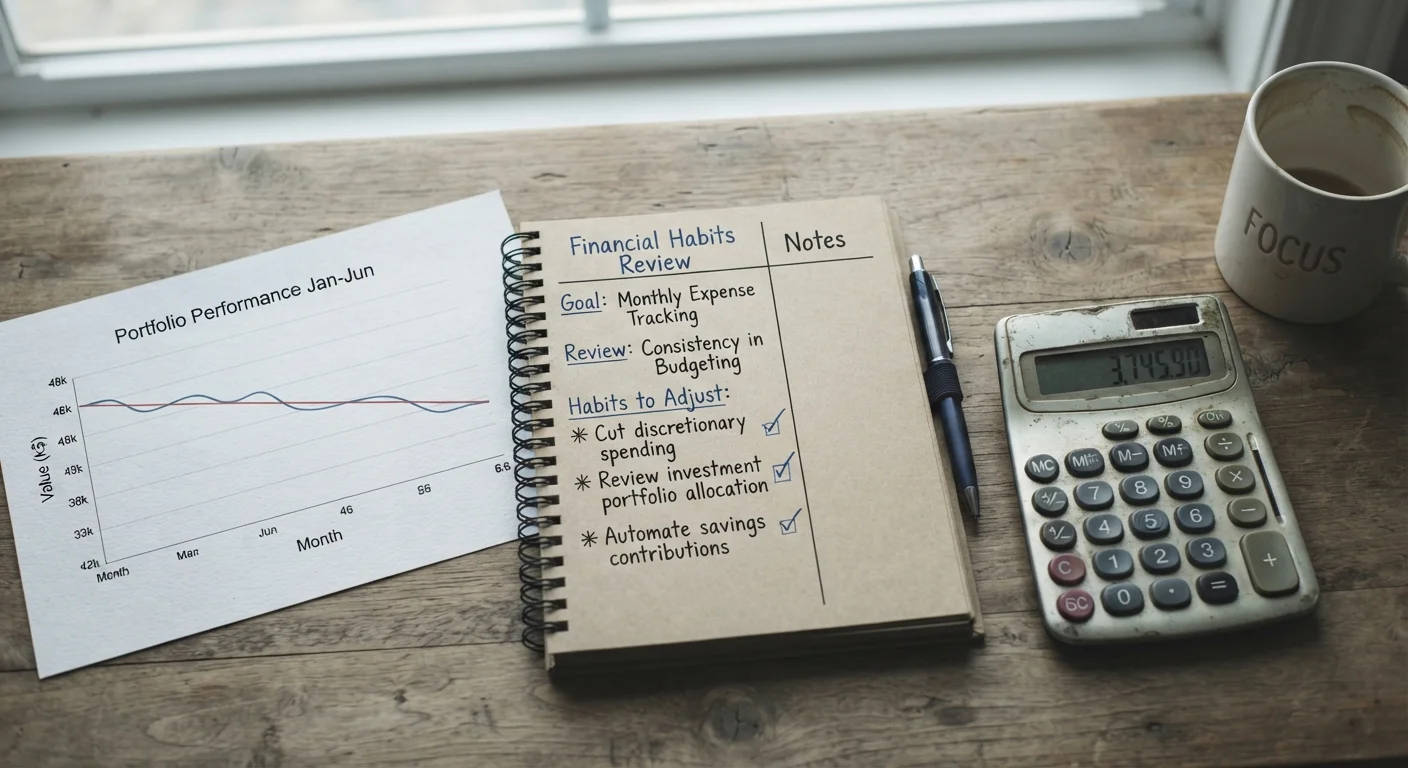
Photo credit: NewBizBuzz.net | Financial Insights For All
Chasing performance, ignoring costs, and mistiming rebalancing are among the subtle patterns that undermine even well-intentioned investors.
Key Takeaways
- Performance chasing often locks in losses by buying high after a run-up.
- Expense ratios and tax drag can consume a significant share of long-run returns.
- Irregular or emotion-driven rebalancing shifts risk exposure in ways investors rarely notice.
- Holding too much cash as a 'safe' move introduces inflation risk and opportunity cost.
- Neglecting tax-location strategy can reduce after-tax wealth even with identical pre-tax returns.
Why Small Habits Compound Into Large Losses
Most portfolio underperformance isn't caused by a single catastrophic decision — it accumulates through repeated small missteps that individually appear harmless. Each overlooked fee, each reactive trade, and each year of unmanaged drift contributes to a return gap that becomes difficult to close over a long horizon.
Research consistently shows that investor returns — what individuals actually earn after behavioral and timing decisions — tend to lag the stated returns of the funds they hold. This gap, sometimes called the behavior gap, reflects the cost of common habits rather than any fundamental flaw in a portfolio's underlying strategy.
Understanding where these habits originate — and how to interrupt them — is foundational to building and compounding personal wealth over time. The mistakes below are not exotic. They are the patterns that quietly erode returns for even well-intentioned, financially aware investors.
Chasing recent top-performing assets by overweighting whatever rallied last.
Why it happens: Strong recent returns feel like evidence of quality, triggering recency bias — the tendency to treat recent trends as predictive. The emotional pull of missing out accelerates the decision.
Ignoring cumulative investment costs, including fund expense ratios, advisory fees, and trading commissions.
Why it happens: Individual costs appear small in isolation — a 0.5% expense ratio or a $10 trade fee barely registers. Investors rarely model how these fees compound over decades.
Rebalancing inconsistently — either too rarely, letting drift accumulate, or too reactively, selling into downturns.
Why it happens: Investors often wait until volatility forces action, which means rebalancing during stress rather than according to a predetermined schedule or threshold.
Holding excess cash 'defensively' for extended periods while waiting for a better entry point.
Why it happens: Market uncertainty makes doing nothing feel prudent. However, extended cash positions lose purchasing power to inflation and forgo compounding on un-invested capital.
Placing assets in the wrong account type, ignoring tax-location principles.
Why it happens: Investors often mirror the same holdings across taxable and tax-advantaged accounts without considering that interest-generating bonds or high-dividend assets trigger more tax drag in taxable accounts.
The Compounding Cost of Inattention
One underappreciated dimension of these habits is how they interact. An investor who chases performance, pays elevated fees on actively managed funds, and then rebalances reactively during downturns stacks multiple return drags on top of each other. The individual costs may seem manageable; the combined effect over two or three decades is not.
~1.5%
Annual investor behavior gap vs. fund returns
Morningstar's Mind the Gap studies have consistently found that the average fund investor earns roughly 1–1.5 percentage points less per year than the stated fund return, primarily due to poorly timed purchases and sales.
~20%
Wealth reduction from a 0.75% fee difference over 30 years
Compounding over long horizons means modest annual fee differences accumulate into material terminal wealth gaps, illustrating why cost management is a primary lever available to all investors.
Inflation's effect on purchasing power adds another layer: cash held back from markets to 'wait for the right moment' is simultaneously losing real value. This makes inaction a form of active decision with measurable consequences.
This Is General Education, Not Personal Advice
The information in this article is intended for educational purposes only and does not constitute personalised financial, investment, or tax advice. Every investor's situation is different. Consult a qualified financial adviser or tax professional before making decisions specific to your circumstances.
Investors who want to examine whether overconfidence or return-chasing has influenced their past decisions may find it useful to review the patterns behind return-chasing behavior. Building awareness of these tendencies is the first step toward correcting them. For those evaluating individual securities, common valuation errors can further distort allocation decisions in ways that compound the habits described above.
This article is for general informational and educational purposes only. It does not constitute personalised financial, investment, or tax advice. Consult a licensed financial adviser or qualified tax professional before making decisions specific to your individual circumstances. Past performance does not guarantee future results, and all investing involves risk, including the possible loss of principal.

Author
Investing Fundamentals Editorial Team
Investing Fundamentals Editorial Team is the collective byline for our editorial team and contributor network. Articles published under this byline or an editorial pen name are researched, written, and reviewed according to our editorial standards for clarity, consistency, and independence before publication.
View all articles →