
Navigating a Total Loss: From Assessment to Settlement
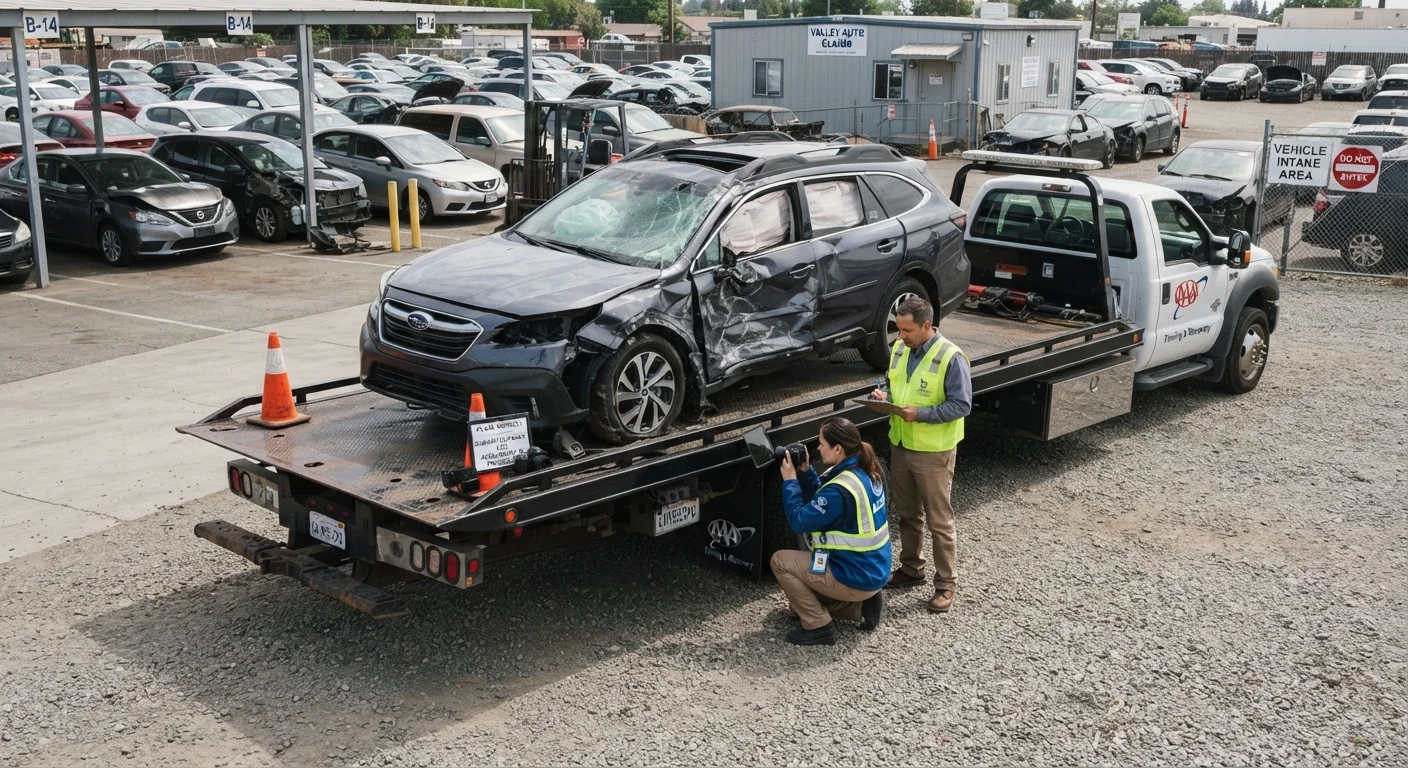
Photo credit: NewBizBuzz.net | Financial Insights For All
In this article
A total-loss declaration triggers a distinct claims path. Understand how insurers determine total loss, value your asset, and calculate your final payout.
Key Takeaways
- Total loss is declared when repair costs exceed a threshold percentage of the vehicle's actual cash value.
- Insurers use market data, condition assessments, and local comparables to establish pre-loss value.
- Your settlement offer can be negotiated — documentation of your vehicle's condition is your strongest tool.
- Outstanding loan balances are paid before you receive any remaining proceeds.
- Gap insurance covers the difference if you owe more than the insurer's valuation.
- You may be able to retain a totaled vehicle, but it will receive a salvage title with lasting consequences.
What "Total Loss" Actually Means
A vehicle — or any insured asset — is declared a total loss when the cost of restoring it to pre-damage condition is not economically justified compared to its current market value. This is a financial determination, not simply a measure of how severe the damage looks. A car with moderate structural damage may be totaled while a visually mangled vehicle with inexpensive parts may not be.
In the auto insurance context, a total loss triggers a distinct settlement pathway: instead of receiving repair authorization, the insurer takes ownership of the damaged asset (the salvage) and pays you its pre-loss value, minus applicable deductibles. Understanding this process from the start helps you engage with your insurer from an informed position.
Total Loss Applies Beyond Vehicles
While this guide focuses on auto insurance, the total-loss concept applies to other insured property as well — including boats, RVs, and in some contexts, structural elements of a home. The core framework (cost of restoration vs. pre-loss value) is consistent, though specific thresholds and procedures differ by asset type and policy.
How Insurers Determine Total Loss
Most states use a Total Loss Threshold (TLT) — a percentage that compares estimated repair costs to the vehicle's ACV. If repairs reach or exceed that percentage, the vehicle is declared a total loss. Thresholds vary by state, commonly ranging from 70% to 100% of ACV. Some states instead use a Total Loss Formula (TLF), which adds the salvage value to repair costs and compares the sum to ACV.
An independent appraiser or staff adjuster physically inspects the vehicle, documents all visible and structural damage, and produces a damage estimate. This estimate — not your repair shop's estimate — drives the insurer's calculation. You have the right to see this estimate and to ask questions about its line items.
Do Not Repair Before the Adjuster Inspects
Authorizing repairs — even minor cleanup — before the insurer's adjuster has documented the damage can compromise your claim. The adjuster needs to assess the vehicle in its post-loss state to produce an accurate damage estimate. Notify your insurer first, then follow their instructions on vehicle storage and access.
How Your Vehicle's Value Is Calculated
The insurer determines Actual Cash Value — what the vehicle was worth on the open market immediately before the loss, accounting for depreciation, mileage, condition, and local market comparables. Common data sources include third-party valuation services, recent local listings for comparable vehicles, and published pricing guides.
Your vehicle's specific condition matters. Documented maintenance records, recent upgrades (new tires, brake pads), and verifiable low mileage can support a higher valuation. Conversely, pre-existing damage or high mileage can reduce it. Gathering evidence of your vehicle's above-average condition before the adjuster finalizes their report is one of the most effective steps you can take.
Pull three to five active local listings for vehicles identical to yours — same make, model, year, trim, and mileage — before the adjuster submits their valuation report. Real-time market data from your own ZIP code often yields higher comparables than national averages.
Insurer valuation tools use broad data sets that may lag your local market; targeted comparables give you concrete evidence to support a higher ACV without speculation.
If you financed your vehicle, confirm whether your auto loan includes gap coverage before assuming it does — many do not, and the absence of gap insurance can leave you owing thousands after a total-loss settlement.
Consumers frequently discover they lack gap coverage only after a total loss, at which point it is too late to add it. Verifying coverage at origination prevents this costly surprise.
For a thorough overview of documentation practices that support any claim, see our guide to filing a claim without undermining your case.
70%–100%
Common total-loss threshold range by state
State regulations set the percentage of ACV at which a vehicle must be declared a total loss; the exact figure differs by jurisdiction.
~20%
Average depreciation in vehicle value after a salvage title
Industry appraisers generally estimate that a rebuilt-salvage title reduces resale value materially compared to a clean-title equivalent.
Understanding Your Settlement Offer
Once the insurer finalizes the ACV, they issue a settlement offer. The payout you actually receive is calculated as:
- ACV minus your deductible = gross settlement
- If you have an outstanding loan, the insurer pays your lender first; any remaining balance goes to you
If your loan balance exceeds the ACV, you are responsible for the shortfall — this is called being underwater on the loan. Gap insurance (Guaranteed Asset Protection) is designed to cover this shortfall. It is typically purchased at the time of financing and is a separate policy or rider, not a standard component of comprehensive or collision coverage.
Your Lender Is Paid First
If you have an outstanding auto loan, the insurer will issue the settlement payment jointly to you and your lender, or directly to the lender first. You receive only what remains after the loan is satisfied. If the ACV is less than your loan balance and you do not have gap insurance, you are responsible for the remaining debt — even though you no longer have the vehicle.
Disputing a Total-Loss Valuation
You are not required to accept the first settlement offer. If you believe the ACV is understated, you can formally dispute it. Effective dispute strategies include:
- Providing comparable vehicle listings from your local market that support a higher value
- Submitting maintenance receipts, inspection reports, or recent service records
- Requesting an independent appraisal — most policies include an appraisal clause that allows each party to hire an independent appraiser, with a neutral umpire resolving disagreements
Keep all communication in writing and maintain a log of calls, adjuster names, and dates. Our practical claims walkthrough covers communication and documentation strategies that apply equally to total-loss disputes. For additional context on why honest, well-prepared claims move faster, see our guide on keeping claims legitimate.
Salvage Titles and Retaining Your Vehicle
When an insurer takes ownership of a totaled vehicle, it receives a salvage title — a state-issued designation indicating the vehicle was declared a total loss. In some states, if you repair and re-inspect a salvage-titled vehicle, it may be re-titled as a rebuilt or reconstructed vehicle, though standards vary significantly.
You may have the option to retain your salvage vehicle by accepting a reduced settlement (the insurer deducts the salvage value it would have otherwise recovered). Before choosing this route, consider: many insurers will not write comprehensive or collision coverage on a vehicle with a salvage title, resale value is significantly diminished, and some states restrict salvage-title vehicles from road use pending inspection.
A salvage-title vehicle can be a reasonable choice for a mechanically savvy owner who intends to keep it long-term, but it should be an informed decision — not a default. Consult a licensed insurance agent in your state before deciding, as regulations and insurer appetite for covering rebuilt vehicles vary widely.
This article is for general informational and educational purposes only and does not constitute personalized insurance, financial, or legal advice. Coverage terms, thresholds, and regulations vary by provider and state. Always read your actual policy documents and consult a licensed insurance agent or adviser for guidance specific to your situation.

Author
Insurance Explained Editorial Team
Insurance Explained Editorial Team is the collective byline for our editorial team and contributor network. Articles published under this byline or an editorial pen name are researched, written, and reviewed according to our editorial standards for clarity, consistency, and independence before publication.
View all articles →