
Liability Coverage Across Insurance Types: How Each Policy Handles Your Legal Exposure
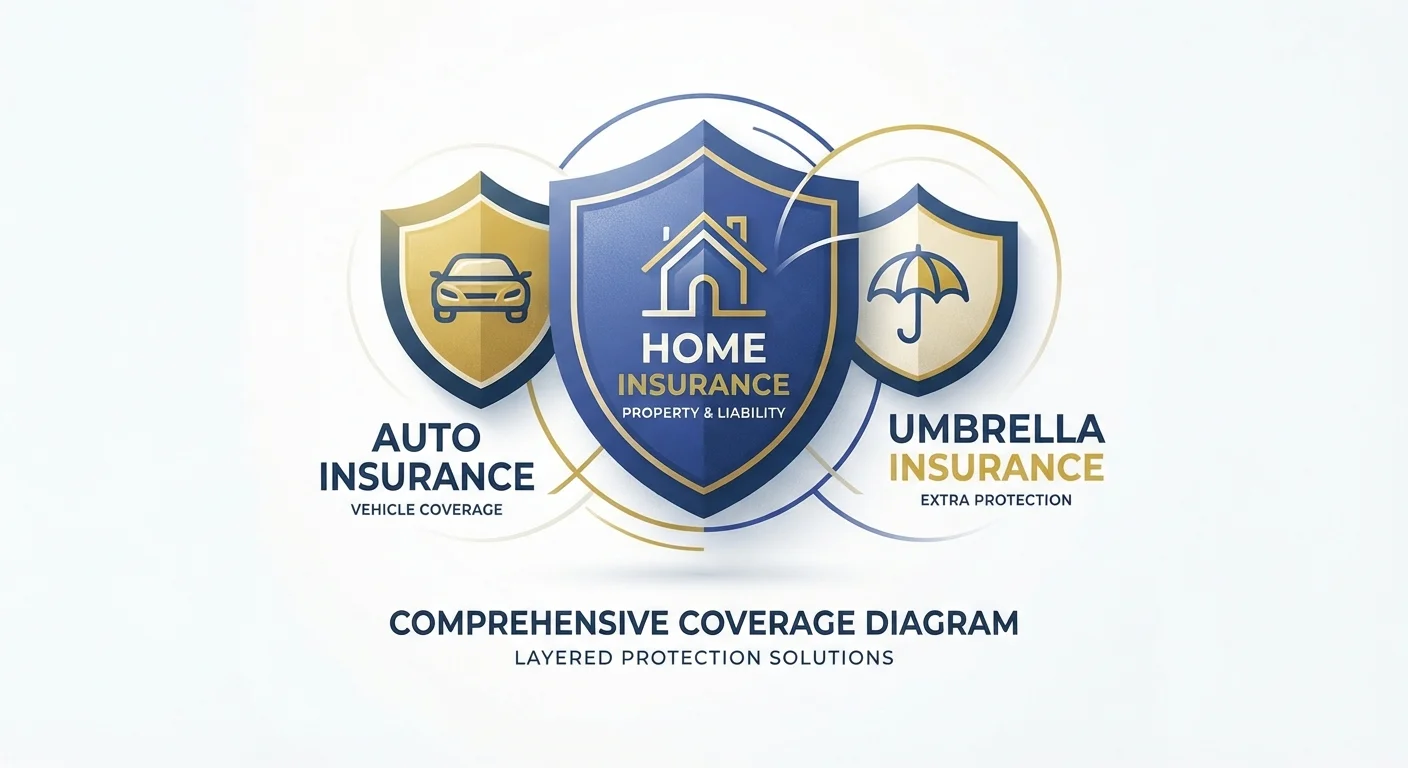
Photo credit: NewBizBuzz.net | Financial Insights For All
In this article
Liability protection appears in auto, home, and umbrella policies — but works differently in each. Here's how the pieces fit together and where overlap exists.
Key Takeaways
- Liability coverage in auto, home, and umbrella policies each protect against different legal exposures.
- Auto liability covers bodily injury and property damage you cause to others while driving.
- Homeowners and renters liability covers incidents on or related to your property and personal actions.
- Umbrella policies extend limits across multiple underlying policies once base limits are exhausted.
- Gaps between policies — such as business activities or intentional acts — are rarely covered by any standard policy.
What Liability Coverage Actually Means
Liability coverage pays for harm you cause to other people or their property — covering legal defense costs, settlements, and court judgments up to your policy limit. It does not protect your own property or body; that is the role of collision, comprehensive, or health coverage. Every major personal insurance type includes some form of liability protection, but the triggering events, exclusions, and limits differ significantly.
Understanding how liability works across policy types is foundational to building a coherent protection plan. See our comprehensive overview of the four major insurance categories for broader context on how each policy type fits together.
Auto Liability: Coverage on the Road
Auto liability is typically split into two components: bodily injury liability (BI) and property damage liability (PD). BI pays for medical expenses, lost wages, and pain-and-suffering claims made by people you injure in an at-fault accident. PD covers repairs or replacement of vehicles and other property you damage.
Limits are usually expressed as split limits (e.g., $100,000 per person / $300,000 per accident / $100,000 property damage) or as a combined single limit. Most states mandate minimum levels, but minimums are often far below what a serious accident costs. Auto policies are built from several layers — liability is only one of them.
Notable exclusions: auto liability does not cover your own injuries, damage to your own vehicle, commercial deliveries, or intentional acts.
Homeowners and Renters Liability: Coverage at Home and Beyond
Personal liability in a homeowners or renters policy covers bodily injury or property damage you, household members, or even pets cause to others — whether the incident happens on your property or elsewhere. A guest who slips on your icy walkway, or a child who accidentally breaks a neighbor's window, are classic examples of covered claims.
Most standard policies include $100,000 in personal liability coverage, with higher limits available. They also typically include medical payments to others — a no-fault coverage that pays small medical bills for injured guests regardless of legal liability, usually up to $1,000–$5,000.
Renters: Don't Overlook Your Liability Exposure
Renters liability coverage is often undervalued, but it protects against meaningful legal risk. If you accidentally cause a fire that spreads to neighboring units or a visitor is injured in your apartment, you could face a significant claim. Confirm your renters policy's liability limit and consider whether it's sufficient for your situation.
Renters often underestimate this coverage. Even without owning property, renters are exposed to personal liability — a fire you accidentally start that damages neighboring units, for instance. Homeowners and renters policies protect different interests, but both include meaningful liability protection.
Key exclusions: business activities conducted from home, motorized vehicle incidents (which fall under auto policy), and intentional harm.
Umbrella Policies: The Liability Extension Layer
A personal umbrella policy is a pure liability product — it provides additional coverage once the liability limits of your underlying auto or homeowners policy are exhausted. Umbrella policies typically start at $1 million in coverage and are relatively affordable given their limit size.
Crucially, umbrellas also fill certain coverage gaps in underlying policies — such as libel, slander, and false arrest — that auto and homeowners policies may not address at all. They generally require you to maintain specified minimum limits on underlying policies as a condition of coverage.
| Auto Liability | Homeowners/Renters Liability | Personal Umbrella | |
|---|---|---|---|
| Primary trigger | At-fault vehicle accidents | Injuries/damage on or off property | Claims exceeding underlying limits |
| Typical coverage limit | $25,000–$500,000+ | $100,000–$500,000 | $1 million–$5 million+ |
| Covers legal defense costs | Yes | Yes | Yes |
| Covers bodily injury to others | Yes | Yes | Yes, in excess |
| Covers business activities | No | No | Generally no |
| Covers libel/slander | No | Sometimes | Often yes |
| Requires underlying policy | No | No | Yes |
For those with substantial assets or high public exposure, an umbrella meaningfully raises the ceiling on total liability protection. Building a liability shield around personal assets involves combining these policy layers deliberately.
Where Standard Liability Coverage Falls Short
Even with auto, homeowners, and umbrella policies in place, significant gaps remain. Common uncovered exposures include:
- Business activities: Home-based businesses, freelance work, or side ventures are typically excluded from personal policy liability provisions.
- Intentional acts: No standard policy covers harm you deliberately cause.
- Professional errors: Malpractice or professional liability requires separate E&O or professional liability coverage.
- Watercraft and recreational vehicles: May be excluded or require separate endorsements.
Many common risks fall outside standard policies — understanding where your liability protection ends is just as important as knowing what it covers. Consult a licensed insurance professional to evaluate your specific exposures.
This article is for general informational and educational purposes only and does not constitute personalized insurance, financial, or legal advice. Coverage terms, limits, exclusions, and availability vary by provider, policy, and state. Always read your actual policy documents and consult a licensed insurance agent or adviser for guidance specific to your circumstances.

Author
Insurance Explained Editorial Team
Insurance Explained Editorial Team is the collective byline for our editorial team and contributor network. Articles published under this byline or an editorial pen name are researched, written, and reviewed according to our editorial standards for clarity, consistency, and independence before publication.
View all articles →