
Homeowners vs. Renters Insurance: Where the Protection Begins and Ends
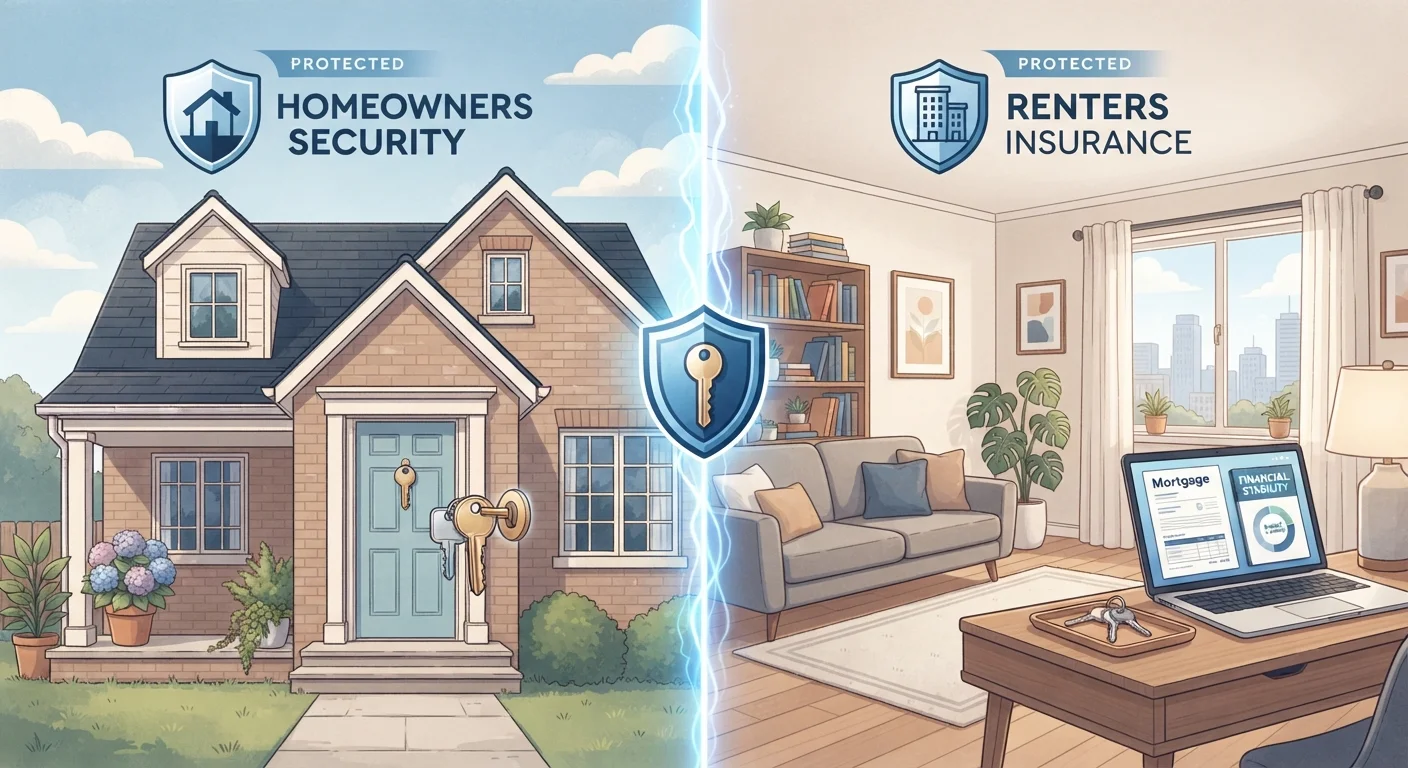
Photo credit: NewBizBuzz.net | Financial Insights For All
In this article
Homeowners and renters policies protect different interests. Learn what each covers, what's excluded, and why renters often underestimate their exposure.
Key Takeaways
- Homeowners insurance covers the building structure; renters insurance does not — that responsibility falls to the landlord.
- Both policy types include personal property and personal liability coverage, though limits and terms differ.
- Renters insurance is significantly less expensive on average, yet many tenants go without it entirely.
- Neither standard policy covers flooding or earthquakes — separate policies are required for those perils.
- Loss of use coverage in both policies helps pay for temporary housing after a covered event.
What Each Policy Is Actually Protecting
The single biggest distinction between homeowners and renters insurance is what qualifies as the insured property. A homeowners policy covers the physical structure — the walls, roof, foundation, and attached fixtures — along with other structures on the lot such as a detached garage or fence. It also extends to personal belongings inside the home and provides personal liability coverage for injuries or property damage you cause to others.
A renters policy, by contrast, begins where the building ends. The landlord holds responsibility for insuring the structure; tenants who assume that coverage extends to their belongings are taking on risk they may not recognize. Renters insurance protects your personal property inside a rented unit — furniture, electronics, clothing, and similar items — plus provides liability coverage and, in most cases, additional living expenses if a covered event forces you out temporarily.
For a broader look at how property coverage fits among the major insurance categories, see the major insurance categories explained.
| Criterion | Homeowners Insurance | Renters Insurance |
|---|---|---|
| Covers the building structure | Yes — dwelling and other structures | No — landlord's responsibility |
| Personal property coverage | Yes — typically higher limits | Yes — typically lower limits |
| Personal liability coverage | Yes | Yes |
| Loss of use / additional living expenses | Yes — generally higher limits | Yes |
| Flood damage | Excluded — separate policy needed | Excluded — separate policy needed |
| Required by a third party | Usually required by mortgage lender | Sometimes required by landlord |
| Typical annual premium range | Higher — reflects structural risk | Lower — no structural coverage |
Shared Coverages — and Where They Diverge
Both policy types share three core coverage areas: personal property, personal liability, and loss of use (also called additional living expenses). The mechanics are similar — a covered peril damages your belongings, and the insurer compensates you up to your policy limit — but the details matter.
Personal property: Homeowners policies typically carry higher default limits reflecting greater asset accumulation among owners. Both policy types offer replacement cost value (RCV) or actual cash value (ACV) settlement options; RCV pays to replace an item at today's prices, while ACV deducts depreciation. High-value items like jewelry, musical instruments, or collectibles may require a separate scheduled endorsement under either policy.
Personal liability: If a guest slips in your living space and sues you, liability coverage responds. Standard limits often start at $100,000, though financial advisers commonly recommend higher limits. For a detailed look at how liability works across policy types, see liability coverage across insurance types.
Loss of use: Both policies cover reasonable temporary housing and living costs — such as hotel stays and restaurant meals — while your home is being repaired after a covered event. Homeowners policies generally carry higher dollar limits here because rebuilding a structure takes longer than repairing a rental unit.
~55%
Share of US renters without renters insurance
Industry surveys have consistently found that roughly half or more of US renters do not carry renters insurance, leaving their personal property and liability unprotected.
$1,200+
Average annual homeowners insurance premium (US)
The National Association of Insurance Commissioners has reported average homeowners premiums exceeding $1,200 annually, with wide variation by state and coverage level.
Common Exclusions in Both Policies
Standard homeowners and renters policies are named-peril or open-peril contracts — meaning coverage applies only to specific causes of loss. Several significant risks fall outside both:
- Flooding: Water damage from rising rivers, storm surge, or overland flooding is excluded from standard policies. Separate flood insurance — available through the National Flood Insurance Program (NFIP) or private carriers — is required.
- Earthquakes: Seismic damage requires a separate earthquake endorsement or standalone policy in most states.
- Home-based business property: Equipment used for a business operated from home often receives limited or no coverage under personal property provisions.
- Pest damage: Termite, rodent, and insect damage is universally excluded as a maintenance issue rather than a sudden loss.
Understanding exclusions before a claim is filed — not after — is essential. Gaps and exclusions in standard insurance policies breaks down where protection typically ends across policy types. You can also explore coverage gaps that commonly catch people off guard.
Flood Insurance Is a Separate Purchase
Neither a standard homeowners policy nor a renters policy covers flooding from external water sources — a distinction that surprises many policyholders at claim time. The National Flood Insurance Program (NFIP), administered by FEMA, offers flood coverage for both homeowners and renters. Private flood insurance options also exist in many markets. If you live in or near a flood zone, this coverage warrants serious consideration regardless of whether your lender requires it.
Why Renters Frequently Underestimate Their Exposure
Many tenants hold a mistaken belief that their landlord's policy covers their belongings if a fire, theft, or burst pipe damages the unit. It does not. A landlord's policy covers the building structure and the landlord's own liability — full stop. A tenant's personal property, temporary housing costs, and personal liability are entirely uncovered unless the tenant carries their own renters policy.
The cost barrier is often overstated. Renters insurance premiums are generally modest relative to the protection provided, though actual premiums vary by location, coverage amount, deductible choice, and insurer. Despite the relative affordability, a meaningful share of renters remain uninsured.
This gap matters especially for tenants who have accumulated significant personal property — a laptop, a bicycle, kitchen appliances, or furniture purchased over several years. Replacing those items out of pocket after a fire or break-in can represent a significant financial setback. For context on how property coverage fits into a broader financial protection plan, see insurance coverage from every angle.
This article is for general informational and educational purposes only and does not constitute personalised insurance, financial, or legal advice. Coverage terms, exclusions, limits, and eligibility vary by insurer, policy, and state. Read your actual policy documents carefully and consult a licensed insurance agent or adviser for guidance specific to your situation.

Author
Insurance Explained Editorial Team
Insurance Explained Editorial Team is the collective byline for our editorial team and contributor network. Articles published under this byline or an editorial pen name are researched, written, and reviewed according to our editorial standards for clarity, consistency, and independence before publication.
View all articles →