
Year-Round Tax Planning Checklist for Working Adults
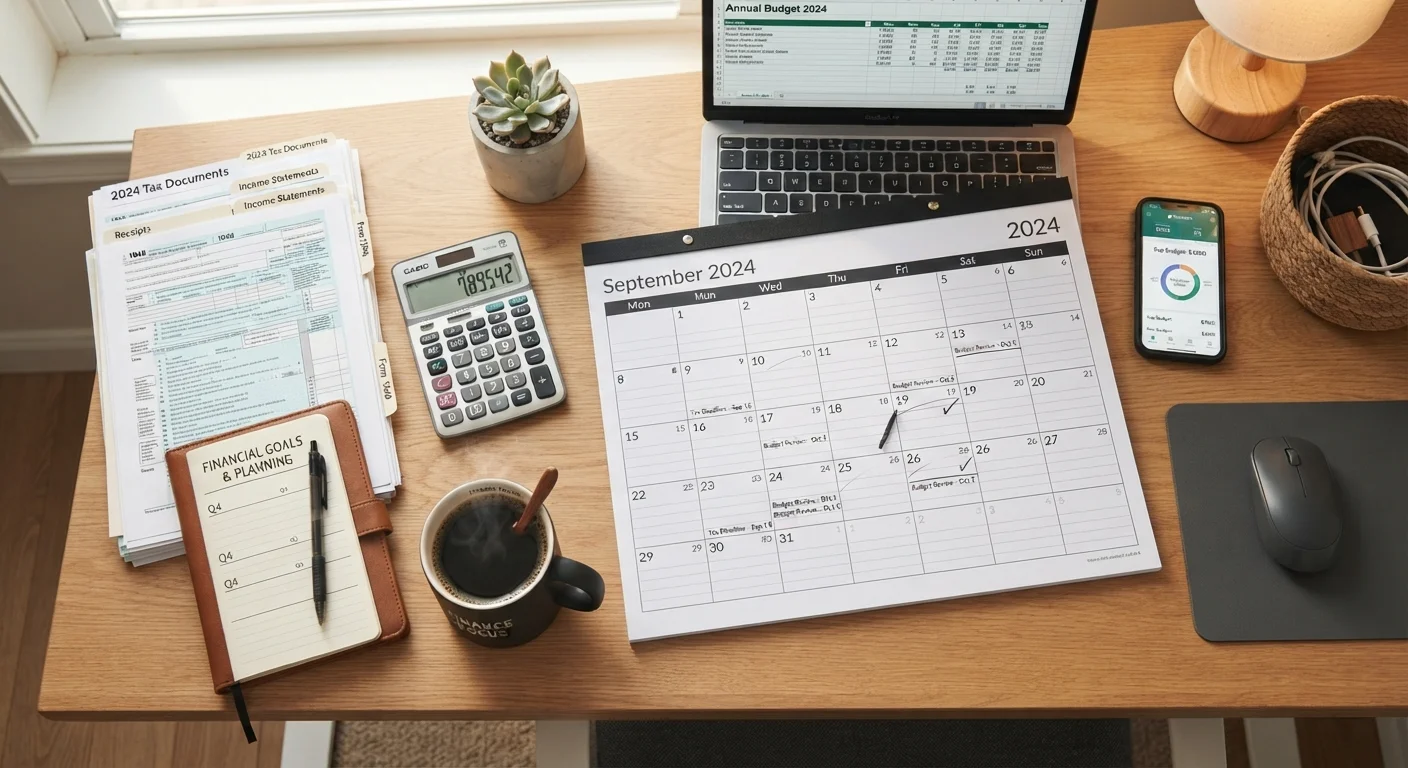
Photo credit: NewBizBuzz.net | Financial Insights For All
In this article
A structured checklist covering quarterly estimated payments, contribution deadlines, document retention, and key reviews to keep your tax position optimised.
Key Takeaways
- Tax planning is most effective when spread across all four quarters, not just April.
- Missing estimated payment deadlines triggers IRS underpayment penalties that compound over time.
- Retirement and HSA contributions made before the filing deadline can reduce current-year taxable income.
- Systematic document retention protects you during audits and supports accurate deduction claims.
- Major life changes — marriage, a new job, a home purchase — require a prompt W-4 review.
Why Year-Round Planning Outperforms April Scrambles
Most working adults treat taxes as a once-a-year event — a stressful sprint between January and April that ends the moment a return is filed. That approach leaves significant money on the table. The IRS tax code rewards people who act strategically across all twelve months: contributing to retirement accounts at the right time, harvesting investment losses before year-end, and staying current on estimated payments to avoid penalties.
This checklist is organized by quarter so you always know what action belongs when. Whether you earn a salary, freelance income, or a mix of both, a consistent review rhythm keeps your tax position optimized without last-minute fire drills. If you are self-employed, you may find additional planning levers covered in our tax strategy guide for self-employed professionals. For a broader look at how tax efficiency fits into overall wealth-building, see The Wealth Growth Audit checklist.
Estimated Payments: Miss Them at a Cost
Taxpayers who expect to owe $1,000 or more after withholding are generally required to make quarterly estimated payments. Skipping or underpaying these installments results in an IRS underpayment penalty calculated on the shortfall — even if you pay the full balance when you file. Use the IRS safe-harbor rules (paying at least 100% of last year's tax liability, or 110% if your adjusted gross income exceeded $150,000) to avoid this penalty.
Tools You Will Need
Working through this checklist does not require specialized software, but several free and low-cost resources make it significantly easier to stay accurate and organized.
IRS Withholding Estimator
Helps employees check whether current paycheck withholding will cover their estimated tax liability for the year.
IRS Form 1040-ES
Used to calculate and submit quarterly estimated tax payments for income not subject to withholding.
Personal finance or tax software
Tracks deductible expenses, generates tax projections, and organizes documents throughout the year.
Secure cloud document storage
Provides encrypted, backed-up storage for tax returns, receipts, and supporting records.
Having these resources in place before you begin each quarterly review reduces friction and ensures you are working with current figures rather than rough estimates.
The Quarterly Checklist
The items below are grouped by the quarter in which they are most time-sensitive. Must items are non-negotiable — skipping them typically triggers penalties or forfeits a permanent opportunity. Should items are strongly recommended for most taxpayers. Nice-to-have items add meaningful value but depend on your individual situation.
Q1 — January through March
Q2 — April through June
Q3 — July through September
Q4 — October through December
Document Retention
Extension to File ≠ Extension to Pay
Filing IRS Form 4868 grants an automatic six-month extension to submit your return, but any tax you owe is still due by the original April deadline. Unpaid balances begin accruing interest and failure-to-pay penalties immediately after that date. Estimate your liability and pay what you can by April to minimize these charges.
Wash-Sale Rule Can Invalidate Harvested Losses
If you sell a security at a loss and repurchase the same or a substantially identical security within 30 days before or after the sale, the IRS disallows the loss under the wash-sale rule. Plan your tax-loss harvesting transactions carefully and consult a tax professional before executing large trades near year-end.
Life Events That Demand an Immediate Review
Certain changes should trigger an off-cycle tax review rather than waiting for the next quarter. Update your W-4 promptly after:
- Marriage or divorce — filing status changes affect your standard deduction and marginal brackets.
- Birth or adoption of a child — new dependent credits and FSA options become available.
- Starting or leaving a job — mid-year income changes can push you into a different withholding situation.
- Purchasing a home — mortgage interest, property taxes, and points may support itemizing deductions.
- Receiving an inheritance — estate and gift tax rules, including stepped-up basis, intersect with your broader strategy; our article on estate planning and taxes explains how these rules interact.
Life also moves fast in areas beyond taxes. An annual review of your insurance coverage can prevent costly gaps that undo careful financial planning — see the case for reviewing your coverage annually for a structured approach.
This article provides general tax information for educational purposes only and does not constitute personalized tax, legal, or financial advice. Tax rules are subject to change, and individual circumstances vary widely. Consult a qualified tax professional or CPA for guidance specific to your situation.

Author
Accounting & Tax Editorial Team
Accounting & Tax Editorial Team is the collective byline for our editorial team and contributor network. Articles published under this byline or an editorial pen name are researched, written, and reviewed according to our editorial standards for clarity, consistency, and independence before publication.
View all articles →